Let’s be honest. The world of skincare has never been more overwhelming. Between the 10-step Korean beauty routines going viral on TikTok, the endless parade of serums, retinols, and vitamin C creams lining the shelves at Sephora, and the countless influencers swearing by their “holy grail” products, figuring out how to actually achieve healthy, glowing skin can feel like an impossible mission.
Here’s a frustrating truth that most people don’t want to hear: You can spend hundreds, even thousands of dollars on skincare products and still not see results. Why? Because without understanding your unique skin type, concerns, and underlying issues, you’re essentially throwing money at a problem you don’t fully understand.
That’s exactly where an esthetician comes in.
Think of an esthetician as a personal trainer for your skin. Just as a personal trainer designs a custom workout plan based on your body’s unique needs, a licensed esthetician creates a personalized skincare strategy based on your skin’s specific needs, challenges, and goals.
In this article, we’re going to break down exactly what an esthetician is, how they differ from a dermatologist, and most importantly, why booking an appointment with one could be the single best investment you ever make in your long-term skin health.
What Exactly Is an Esthetician?
The Definition
An esthetician (also commonly spelled aesthetician) is a state-licensed skincare professional who specializes in cosmetic treatments, skin health, and maintenance. More specifically, they focus on the epidermis, the outermost layer of the skin visible.
It is important to note that estheticians work on the cosmetic and maintenance side of skincare. They are not medical doctors, and they do not diagnose or treat medical skin conditions. However, within their scope of practice, they are highly skilled, deeply knowledgeable, and incredibly effective at helping people achieve and maintain a healthy skin barrier and a radiant complexion.
Education & Licensing
Becoming a licensed esthetician is no small feat. It requires completing an accredited esthetics program, which typically ranges from 260 to 1,500 hours of training, depending on the state. During this training, students study a wide range of subjects, including:
- Skin anatomy and physiology — understanding the layers of the skin and how they function
- Skin conditions and analysis — identifying acne, hyperpigmentation, rosacea, and more
- Product chemistry — understanding ingredients and how they interact with the skin
- Sanitation and infection control — maintaining a hygienic and safe environment
- Advanced treatment techniques — facials, chemical peels, microdermabrasion, and more
After completing their program, aspiring estheticians must pass a state board examination — both written and practical — before they are legally permitted to practice. This rigorous process ensures that every licensed skincare expert you see has a verified, standardized level of knowledge and skill.
What Does an Esthetician Do? (Top Services)
Once licensed, estheticians offer a wide range of professional services designed to improve and maintain your skin’s health and appearance. Here’s a look at the most common and impactful treatments:
- In-Depth Skin Analysis: Using professional magnifying lamps and Wood’s lamps, estheticians can see beneath the skin’s surface to identify clogged pores, sun damage, dehydration, and early signs of aging that are completely invisible to the naked eye.
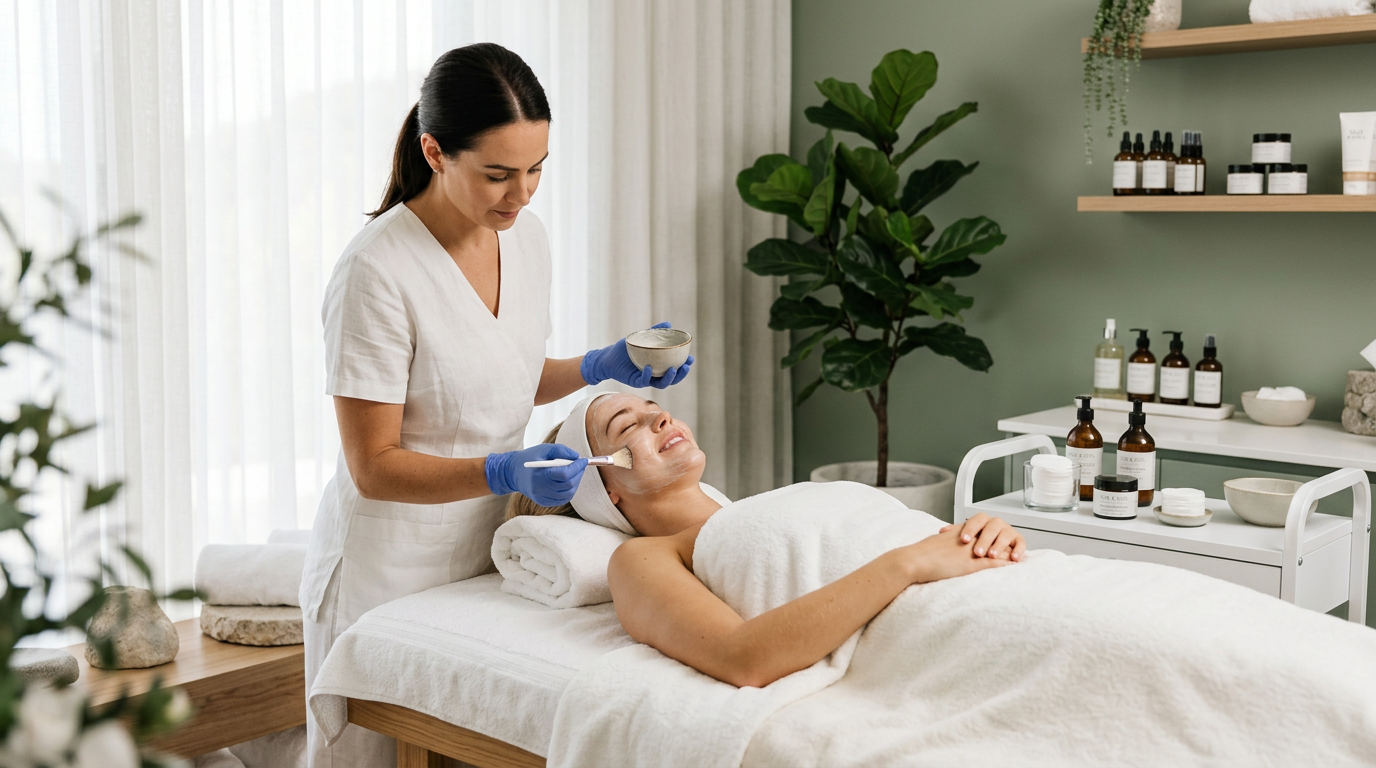
- Custom Facials: This is the bread and butter of esthetics. A custom facial involves deep cleansing, steaming to open pores, targeted serums and masks, and a relaxing facial massage to promote blood circulation and lymphatic drainage.
- Professional Exfoliation: Unlike the gentle scrubs you use at home, estheticians perform microdermabrasion, dermaplaning, and chemical peels at concentrations and depths that are far more effective at removing dead skin cells and stimulating cellular turnover.
- Safe Extractions: We’ve all been tempted to pop a pimple at home. An esthetician safely and hygienically clears clogged pores, blackheads, and minor breakouts using professional techniques that prevent scarring, infection, and post-inflammatory hyperpigmentation.
- Advanced Specialty Treatments: Many estheticians also offer cutting-edge treatments such as LED light therapy (for acne and anti-aging), microcurrent facials (to tone and lift facial muscles), and high-frequency treatments (to kill acne-causing bacteria).
Esthetician vs. Dermatologist: Who Should You See?
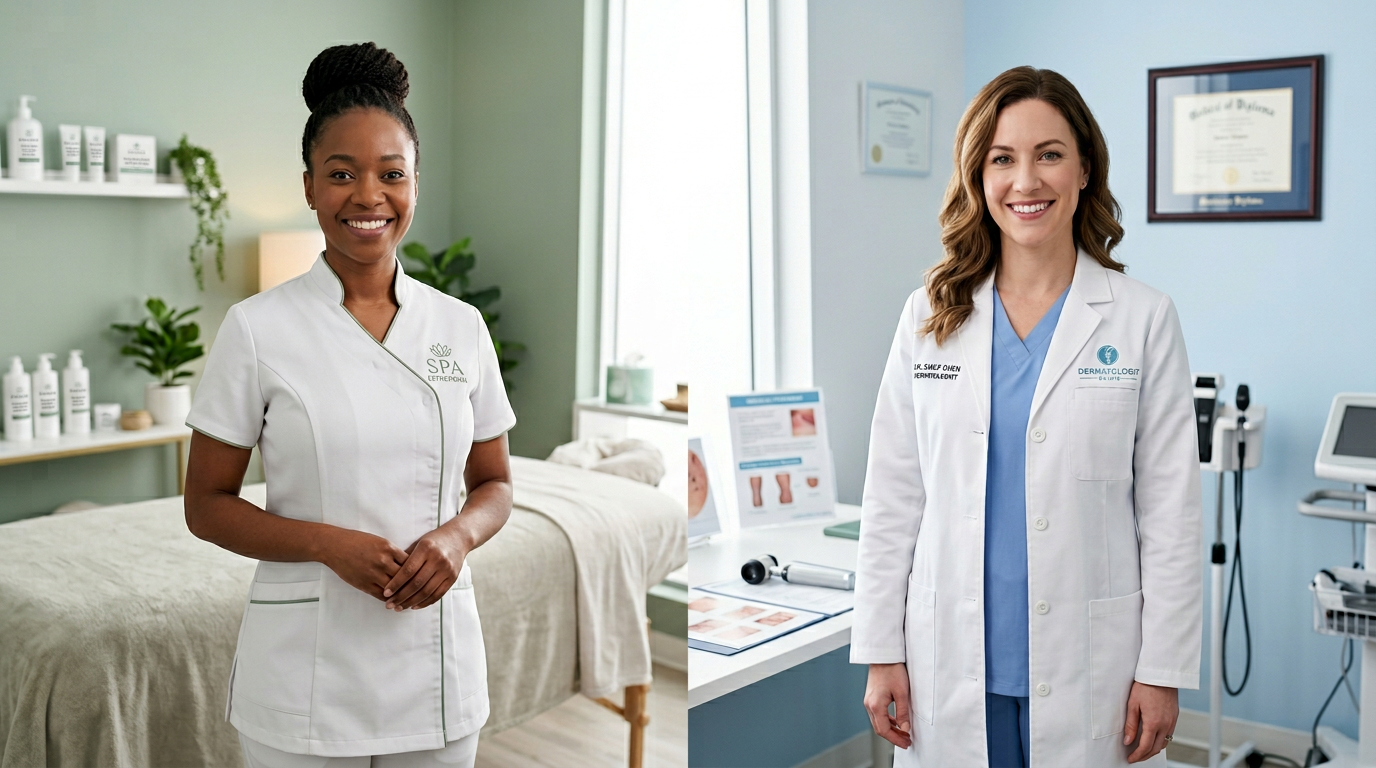
This is one of the most frequently searched questions in the skincare world, and the answer is more nuanced than most people think. Here’s a clear breakdown:
The Dermatologist (Medical Professional)
A board-certified dermatologist is a medical doctor who specializes in diagnosing and treating diseases of the skin, hair, and nails. You should see a dermatologist when you are dealing with:
- Severe, cystic, or hormonal acne that requires prescription medication
- Unexplained rashes, hives, or allergic skin reactions
- Skin cancer screenings and mole checks
- Psoriasis, eczema, or other chronic skin conditions
- Prescriptions for retinoids, antibiotics, or other medical-grade treatments
The Esthetician (Cosmetic & Maintenance Expert)
An esthetician, on the other hand, is your go-to licensed skincare expert for cosmetic improvement and daily skin maintenance. They are the right choice when you are looking for:
- A professional analysis of your skin type and concerns
- Regular maintenance facials to keep your skin clear and glowing
- Anti-aging treatments and preventative skincare strategies
- Guidance on building the right skincare routine for your unique skin
The Synergy: Why You Need Both
Here’s what most people don’t realize — estheticians and dermatologists work best as a team. For example, if a dermatologist prescribes a retinoid for acne, your skin will go through a challenging adjustment period marked by dryness and peeling. A skilled esthetician can help you manage that process with nourishing, barrier-supporting treatments, making your dermatologist’s prescribed treatment far more effective and comfortable.
5 Reasons You Need an Esthetician for Healthy Skin
1. They Eliminate the Skincare Guesswork
You might be convinced that you have oily skin, only for a licensed esthetician to identify that your skin is actually severely dehydrated — a completely different condition that requires the opposite approach. Without a professional skin analysis, most people are unknowingly using the wrong products, which can make their skin issues significantly worse. An esthetician removes the guesswork entirely.
2. Access to Professional-Grade Products & Tools
Walk into any drugstore, and you’ll find a 2% salicylic acid cleanser. Walk into an esthetician’s treatment room,m and you’ll find pharmaceutical-grade ingredients at concentrations not available over the counter. From professional-strength chemical peels to medical-grade LED devices, the tools and products used by a licensed skincare expert operate on a completely different level of efficacy.
3. Safe, Scar-Free Extractions
Raise your hand if you’ve ever popped a pimple and ended up with a dark scar that lasted for months. We’ve all been there. Estheticians are trained in hygienic, pressure-controlled extraction techniques that effectively clear blocked pores without damaging the surrounding skin tissue, preventing the scarring and infection that DIY extractions so often cause.
4. Anti-Aging and Long-Term Preventive Care
One of the most underrated professional facial benefits is its powerful anti-aging effect. Regular professional exfoliation removes the layer of dead skin cells that makes skin look dull and aged. At the same time, expert facial massage techniques stimulate collagen production and blood circulation — two key factors in maintaining firm, youthful skin. The earlier you start, the better your skin will age.
5. Lowering Cortisol: The Stress-Skin Connection
Here is where the science gets fascinating. Research has consistently shown that high cortisol levels (the body’s primary stress hormone) directly trigger inflammation, increase oil production, and worsen conditions like acne, rosacea, and eczema. The deeply relaxing environment of an esthetician’s treatment room has been shown to significantly lower cortisol levels. In other words, a facial doesn’t just improve your skin from the outside — it literally improves your skin from the inside out by calming your nervous system.
How Often Should You See an Esthetician?
The golden rule in the esthetics industry is once every 4 to 6 weeks. This isn’t an arbitrary number — it is specifically aligned with the skin’s natural cell turnover cycle, which is approximately 28 days in young adults (and slows as we age). By scheduling a professional treatment at this interval, you ensure your skin is always operating at its peak cellular renewal rate.
If monthly appointments aren’t currently in your budget, the absolute minimum recommendation is four times a year — once per season. This is because your skin’s needs change dramatically with the weather. For example:
- Summer: Focus on oil control, SPF, and treating sun damage
- Fall: Begin transitioning to richer, more hydrating products
- Winter: Prioritize barrier repair and deep hydration to combat harsh, dry air
- Spring: Focus on brightening, detoxifying, and prepping skin for increased sun exposure
How to Find the Right Esthetician for You
Now that you’re ready to book, here’s how to make sure you find the perfect match:
- Check Their Credentials: Every licensed esthetician is required to display their state license in their treatment room. Always verify that it is current and valid. You can also check your state’s cosmetology board website to confirm their license status.
- Look for a Specialty: Just like doctors have specialties, so do estheticians. Some specialize in acne-prone skin, others in anti-aging treatments, and others in holistic or organic skincare. Research their area of expertise and make sure it aligns with your primary skin concerns.
- Always Ask for a Consultation First: A truly skilled and professional esthetician will never jump straight into a treatment. Before they touch your face, they should be asking you about your current skincare routine, diet, lifestyle, stress levels, medications, and specific skin goals. This consultation is a non-negotiable green flag.
- Ask to See Before and After Photos: A confident, experienced esthetician will have a portfolio of their client results. This gives you a realistic preview of what they can achieve.
Your Skin Deserves a Professional
Let’s bring it all together. An esthetician is not a luxury. They are not just someone who gives you a relaxing spa day, although that is certainly a wonderful bonus. A licensed esthetician is a highly trained, state-certified skincare professional who serves as an indispensable partner in your long-term skin health journey.
From conducting a professional skin analysis that finally solves the mystery of your skin type, to performing safe extractions, delivering powerful anti-aging treatments, and guiding you toward the right skincare routine, the value of a skilled esthetician is truly immeasurable.
Here’s the bottom line: Glowing, healthy skin is not just about vanity. Your skin is your body’s largest organ. It is your first line of defense against the outside world, and its health reflects your overall wellness. Investing in your skin is, without question, investing in yourself.