
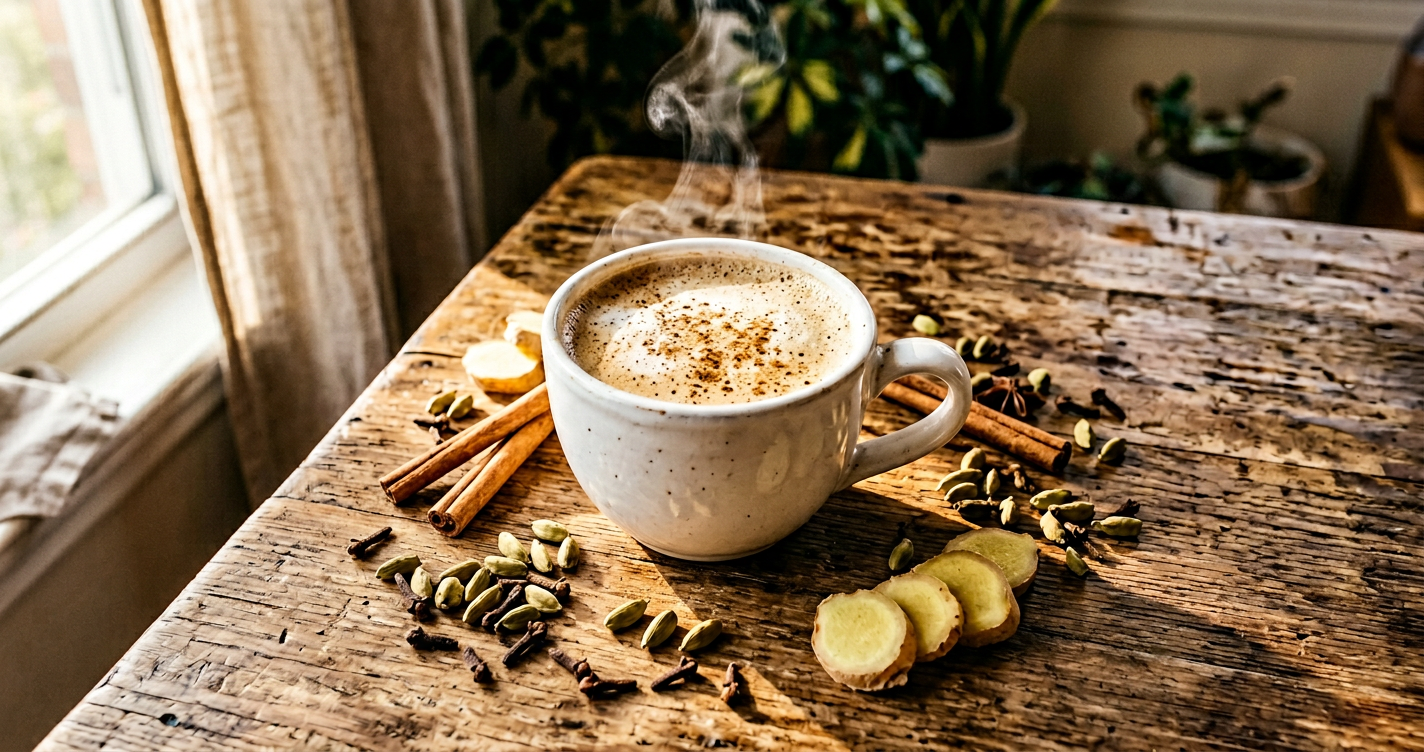
You’re sipping your cup of chai tea and wondering: will this keep me awake at night?
Chai tea is delicious. It’s warm, spiced, and feels healthy. But there’s a question many chai drinkers have: does chai tea have caffeine?
The answer is yes. Chai tea does have caffeine. But the amount changes depending on what’s in your cup. Some chai blends have as much caffeine as a cup of black tea. Others have very little. If you’re drinking chai at 8 p.m. and wondering why you can’t sleep, the caffeine might be the reason.
Here’s what you need to know. This guide will tell you exactly how much caffeine is in chai tea. You’ll learn how it compares to coffee and regular tea. And you’ll find out which types of chai have the least caffeine. If you’re sensitive to caffeine or want to avoid it before bed, this article will help you make the right choice.
Does Chai Tea Have Caffeine? The Simple Answer
Yes, chai tea has caffeine. Most chai blends contain black tea as the main ingredient. Black tea naturally has caffeine. So your cup of chai will have caffeine too.
How much? A typical cup of chai tea has about 25 to 50 milligrams of caffeine. That’s the amount in an 8-ounce cup. Some chai has more. Some has less. It depends on the recipe and how long you brew it.
Let’s put this in perspective. A cup of coffee has 95 to 200 milligrams of caffeine. That’s way more than chai. A cup of regular black tea has 40 to 70 milligrams. Chai is usually somewhere in the middle or lower than black tea.
Why is chai lower in caffeine? First, many chai recipes mix black tea with herbs and spices. Things like ginger, cinnamon, cardamom, and cloves don’t have caffeine. They dilute the caffeine from the tea. Second, people usually brew chai with milk and sweetener. The milk and sweetener add volume to your drink. This means the caffeine gets spread out over more liquid.
Here’s what matters: if you’re sensitive to caffeine, chai is probably safe to drink. It has less caffeine than a cup of coffee. It might not keep you awake. But if you’re very sensitive or drinking chai late at night, you should know how much caffeine you’re getting.
The rest of this guide will help you figure that out. You’ll learn exactly how much caffeine different types of chai have. And you’ll find out how to make chai with even less caffeine if you want to.
How Much Caffeine Is in Chai Tea? Exact Numbers
The caffeine in chai tea isn’t the same in every cup. It depends on several things. Let’s break it down.
First, there’s the tea itself. Most chai uses black tea leaves as the base. But not all black tea is the same. Assam tea from India has more caffeine than Darjeeling tea. If your chai uses Assam, it will have more caffeine. If it uses Darjeeling, it will have less.
Second, there’s how long you brew it. This is huge. Brew your chai for 3 minutes and you get about 25 to 30 milligrams of caffeine. Brew it for 5 minutes and you get 40 to 50 milligrams. And brew it for 7 minutes and you might get 60 milligrams. The longer you brew, the more caffeine enters the water.
Third, there’s the recipe. Traditional chai uses a lot of black tea. A chai latte from a coffee shop might use less black tea and more milk and spices. That means less caffeine per cup.
Here are some real numbers according to Nutritionix’s caffeine database:
Typical Chai Caffeine Amounts:
- Homemade chai (3-minute brew): 25 to 30 mg
- Homemade chai (5-minute brew): 40 to 50 mg
- Starbucks Chai Tea Latte: 50 mg
- Teavana Chai Tea: 30 mg
- Decaf chai blends: 2 to 5 mg
Want less caffeine? You have options. Some companies make decaf chai. This uses decaf black tea leaves instead of regular ones. Decaf chai has only 2 to 5 milligrams of caffeine. That’s almost no caffeine at all.
You can also make your own chai. When you make it at home, you control everything. You choose the tea. You decide how long to brew. And you pick the spices. This is the best way to know exactly how much caffeine you’re getting.
The key point: chai has caffeine, but not a lot. And you can control how much by brewing time and the recipe you use.
Chai Tea vs. Coffee vs. Regular Tea: Caffeine Comparison
If you’re trying to figure out if chai is high or low in caffeine, compare it to other drinks. This will help you decide when to drink it.
Coffee is the winner for caffeine. One 8-ounce cup of coffee has 95 to 200 milligrams of caffeine. That’s a lot. Most people drink more than 8 ounces too. A typical coffee cup at a coffee shop is 12 to 16 ounces. So you’re getting even more caffeine than those numbers.
Regular black tea has 40 to 70 milligrams per 8 ounces. That’s more than chai. Why? Because black tea is just leaves and water. Chai mixes black tea with milk, spices, and sweetener. This dilutes the tea and lowers the caffeine.
Green tea has about 25 to 50 milligrams per 8 ounces. That’s similar to chai. But chai usually has less because of the added milk.
Quick Caffeine Comparison:
| Drink | Caffeine per 8 oz |
|---|---|
| Coffee | 95-200 mg |
| Black tea | 40-70 mg |
| Chai tea | 25-50 mg |
| Green tea | 25-50 mg |
| Herbal tea | 0-5 mg |
Here’s a helpful way to think about it. If you can drink coffee and feel awake, you can definitely drink chai. Chai has less than a quarter of the caffeine that coffee has. If you’re trying to cut back on caffeine, switching from coffee to chai is a smart move.
Herbal tea has almost no caffeine. Most herbal teas have 0 to 5 milligrams. If you want zero caffeine, herbal tea is your best choice. But chai is still a good option if you want a little bit of caffeine without going overboard.
Here’s what this means for your day. You can safely drink chai in the afternoon. You might even be able to drink it in the early evening without it affecting your sleep. But if you’re very sensitive to caffeine, stick to morning or midday drinking.
The bottom line: chai has less caffeine than coffee and regular black tea. It has similar amounts to green tea. If you’re looking for a low-caffeine warm drink, chai is a good option.
Why Does Chai Tea Have Caffeine? Understanding the Source
Where does the caffeine in chai come from? It comes from the black tea leaves. All black tea naturally contains caffeine. It’s not added. It’s part of the plant itself.
The black tea comes from a plant called Camellia sinensis. This plant produces caffeine as a natural chemical. The caffeine is in the leaves. When you steep the leaves in hot water, the caffeine dissolves into your drink. That’s why you get caffeine in your cup.
The spices in chai don’t have caffeine. Ginger, cinnamon, cardamom, and cloves are all caffeine-free. The milk doesn’t have caffeine either. The sweetener doesn’t have caffeine. Only the black tea leaves bring caffeine to your cup.
Here’s something interesting. Different types of black tea have different amounts of caffeine. Assam tea from India has more caffeine. Darjeeling tea has less. Ceylon tea from Sri Lanka has a medium amount. This is because the plants are grown in different places. The climate, soil, and altitude change how much caffeine the plant makes.
How tea is processed also matters. Black tea leaves are dried and oxidized. This process doesn’t add or remove caffeine. But the size of the leaves does matter. Whole leaves have less caffeine per ounce than broken leaves or dust. Broken leaves and dust release caffeine faster and have higher caffeine concentration. This is why loose leaf chai might have less caffeine than chai dust.
When you mix black tea with milk, spices, and sweetener to make chai, you’re diluting the tea. The caffeine gets spread out. So chai has less caffeine per cup than pure black tea. This is why chai is a good middle ground. It gives you some caffeine but not too much.
The key: chai has caffeine because black tea has caffeine. Understanding this helps you make smart choices about when to drink it.
Does Chai Tea Keep You Awake? When to Drink It
Will chai tea keep you awake? For most people, the answer is no. Chai has much less caffeine than coffee. One cup won’t give you a jolt that keeps you up all night.
But here’s what matters: it depends on you. Everyone’s body reacts to caffeine differently. Some people are very sensitive. Others can drink coffee at 9 p.m. and sleep fine. If you’re sensitive to caffeine, even a little bit might affect your sleep.
How fast does caffeine work? Mayo Clinic explains that caffeine starts affecting your body within 15 to 30 minutes. It reaches its peak effect around 30 to 60 minutes after you drink it. Then your body slowly breaks it down. The half-life of caffeine is 5 to 6 hours. This means that 5 to 6 hours after drinking chai, half of the caffeine is still in your system.
Let’s use an example. You drink chai at 2 p.m. with 40 milligrams of caffeine. By 8 p.m., 20 milligrams is still in your body. By 2 a.m., 10 milligrams is still there. If you’re very sensitive, this small amount might affect your sleep.
Caffeine Timeline Example:
- 2 p.m.: Drink chai (40 mg caffeine)
- 2:30 p.m.: Caffeine starts working
- 3 p.m.: Peak caffeine effect
- 8 p.m.: Half the caffeine remains (20 mg)
- 2 a.m.: Quarter of caffeine remains (10 mg)
Here’s when chai is safest to drink. Morning is perfect. Afternoon is fine. Early evening, like before 4 p.m., is usually okay. But drinking chai after 6 p.m. might keep some people awake.
The smart move: know your body. If you’re sensitive to caffeine, drink chai in the morning or early afternoon. If you’re not sensitive, you probably have more freedom. You might be able to drink chai in the evening without problems.
There’s also something called caffeine tolerance. If you drink caffeine regularly, your body gets used to it. You might feel less of an effect. But this is different from being immune. Caffeine still affects your body even if you don’t feel it.
One more thing: other factors matter too. Stress, exercise, food, and sleep debt all affect how caffeine impacts you. If you’re tired and stressed, caffeine will affect you more. If you’re well-rested and calm, it might affect you less.
The bottom line: for most people, chai won’t keep you awake. But if you’re sensitive to caffeine, avoid it after early afternoon.
How to Make Low-Caffeine or Caffeine-Free Chai at Home
If you want to drink chai but worry about caffeine, you have options. You can make lower-caffeine chai at home. Or you can make chai with zero caffeine. Here’s how.
1: Use Less Tea or Brew for Less Time
If a recipe calls for 2 teaspoons of black tea, use 1 teaspoon instead. Or brew for 3 minutes instead of 5. Both methods cut the caffeine. Brewing for 3 minutes instead of 5 reduces caffeine by about 40 to 50 percent. Using half as much tea cuts it in half.
2: Mix Regular and Decaf Tea
Use half decaf black tea and half regular black tea. This keeps some of the chai flavor and effect but cuts the caffeine in half. You can adjust the ratio based on how much caffeine you want.
3: Buy Decaf Chai or Decaf Black Tea
Many companies sell decaf versions. Decaf tea goes through a process to remove most of the caffeine. Decaf chai has only 2 to 5 milligrams of caffeine per cup. It tastes similar to regular chai.
4: Boost the Spices
When you use less tea, you lose some flavor. Fix this by adding more spices. Add extra ginger, cinnamon, cardamom, or cloves. These have no caffeine but lots of flavor. Your chai will taste rich and delicious without the caffeine.
5: Make Herbal Chai
Use herbal tea instead of black tea. Good options are rooibos tea or herbal blends. Rooibos is naturally caffeine-free. It’s red-colored and has a warm, slightly sweet taste. Mix it with milk, sweetener, and spices just like regular chai. You get the chai experience with zero caffeine.
Simple Low-Caffeine Chai Recipe
Here’s something you can make right now:
Ingredients:
- 1 teaspoon black tea
- 1 cinnamon stick
- 3 to 4 cardamom pods
- 1 slice of fresh ginger
- 1 whole clove
- 1 cup of milk
- 1 teaspoon of honey or sugar
- 1 cup of water
Steps:
- Boil water in a small pot
- Add the tea, cinnamon stick, cardamom, ginger, and clove
- Brew for 3 minutes
- Strain out the solids
- Add milk and sweetener
- Heat gently for 1 more minute
- Pour into your cup and enjoy
This gives you a delicious cup with only 20 to 25 milligrams of caffeine. If you want even less, brew for only 2 minutes instead of 3.
Caffeine-Free Chai Recipe
Want zero caffeine? Try this:
Ingredients:
- 1 teaspoon rooibos tea
- 1 cinnamon stick
- 3 to 4 cardamom pods
- 1 slice of fresh ginger
- 1 whole clove
- 1 cup of milk
- 1 teaspoon of honey
- 1 cup of water
Steps:
- Boil water in a small pot
- Add rooibos, cinnamon, cardamom, ginger, and clove
- Brew for 5 minutes
- Strain out the solids
- Add milk and sweetener
- Heat gently
- Serve
You get zero caffeine but all the chai flavor and warmth.
Making chai at home is easy and cheap. You control exactly how much caffeine goes into your cup. This is the best way to enjoy chai without worrying about caffeine.
Is Chai Safe for Pregnant Women, Kids, and Sensitive People?
Can pregnant women drink chai tea? Yes, but with limits. According to ACOG, pregnant women should not have more than 200 milligrams of caffeine per day. One cup of chai at 25 to 50 milligrams is fine. You could have multiple cups and still stay within the safe limit.
But talk to your doctor before making changes. Every pregnancy is different. Your doctor might recommend less caffeine based on your situation.
What about kids? Kids shouldn’t drink caffeine regularly. Their bodies are smaller and more sensitive to caffeine. A small amount of chai probably won’t hurt a child. But it’s better to avoid giving them caffeinated drinks. Stick to herbal chai or decaf options for kids.
What if you’re sensitive to caffeine? Start with a small amount. Try half a cup. Wait a few hours. See how you feel. If you feel jittery, anxious, or get a headache, chai might not be right for you. If you feel fine, you can try a full cup next time.
Some medications interact with caffeine. If you take certain heart medications, blood pressure meds, or thyroid medications, caffeine might affect them. Talk to your doctor or pharmacist before drinking chai regularly. They can tell you if there are interactions.
Quick Guide for Special Groups:
Pregnant Women:
- Safe limit: 200 mg caffeine per day
- Chai amount: 1 to 2 cups maximum
- Action: Talk to your doctor first
Kids:
- Recommendation: Avoid regular caffeine drinks
- Action: Use decaf or herbal chai instead
Caffeine-Sensitive People:
- Action: Test a small amount first (half a cup)
- Wait 2 to 3 hours and observe
- If fine, try a full cup next time
People on Medications:
- Action: Check with doctor or pharmacist
- Be honest about how much chai you’ll drink
- Ask about interactions
The good news: most people can enjoy chai without problems. The caffeine amount is low enough that it doesn’t cause issues for most adults. But if you fall into one of these groups, take extra care.