ou look down at your legs and notice your ankle blends right into your calf. No visible bone. No taper. Just one thick line from knee to foot.
Maybe you heard the word “cankles” and wondered if that is what you have. Maybe someone said it to you and it stung. Either way, you are here because you want a real answer.
Here is what most articles get wrong. They either treat cankles like a joke or they make it sound like a serious disease. The truth sits somewhere in the middle.
Some people have thick ankles because of their genetics. Others develop them because of fluid buildup or weight changes. And sometimes, swollen ankles point to a health condition that needs attention.
This article will tell you exactly what cankles are, why they happen, when to call a doctor, and what you can actually do about them. No hype. No shame. Just clear information you can use.
What Are Cankles, Really?
The word “cankle” is a blend of “calf” and “ankle.” It describes the area where there is little to no visible definition between the two. That is the entire definition.
It is not a medical term. No doctor will write “cankles” in your chart. But the physical reality behind the word is very real, and it affects a lot of people.
There are two different things that can cause this look:
First, your bone structure and body composition. Some people are simply built with thicker ankle bones or carry fat in the lower leg area. This is genetic. It has nothing to do with fitness level or how hard you work out.
Second, fluid buildup. When the body holds extra water, it often settles in the lower legs and ankles. This can make even slim ankles look thick and puffy.
These two causes are very different. And the fix for one is not the fix for the other.
The word “cankles” got big in pop culture after the movie “Shallow Hal” in 2001. Since then, it has spread across social media. A search on TikTok or Reddit turns up thousands of posts from people feeling frustrated, confused, and embarrassed about their ankle shape. You are not alone in asking this question.
But here is something worth knowing from the start. If your ankles have always looked this way, it is most likely structural. If the thickness is new or gets worse throughout the day, that points to fluid retention. And fluid retention sometimes signals something your doctor should know about.
More on that in a moment.
Why Do Some People Get Cankles? The 5 Main Causes
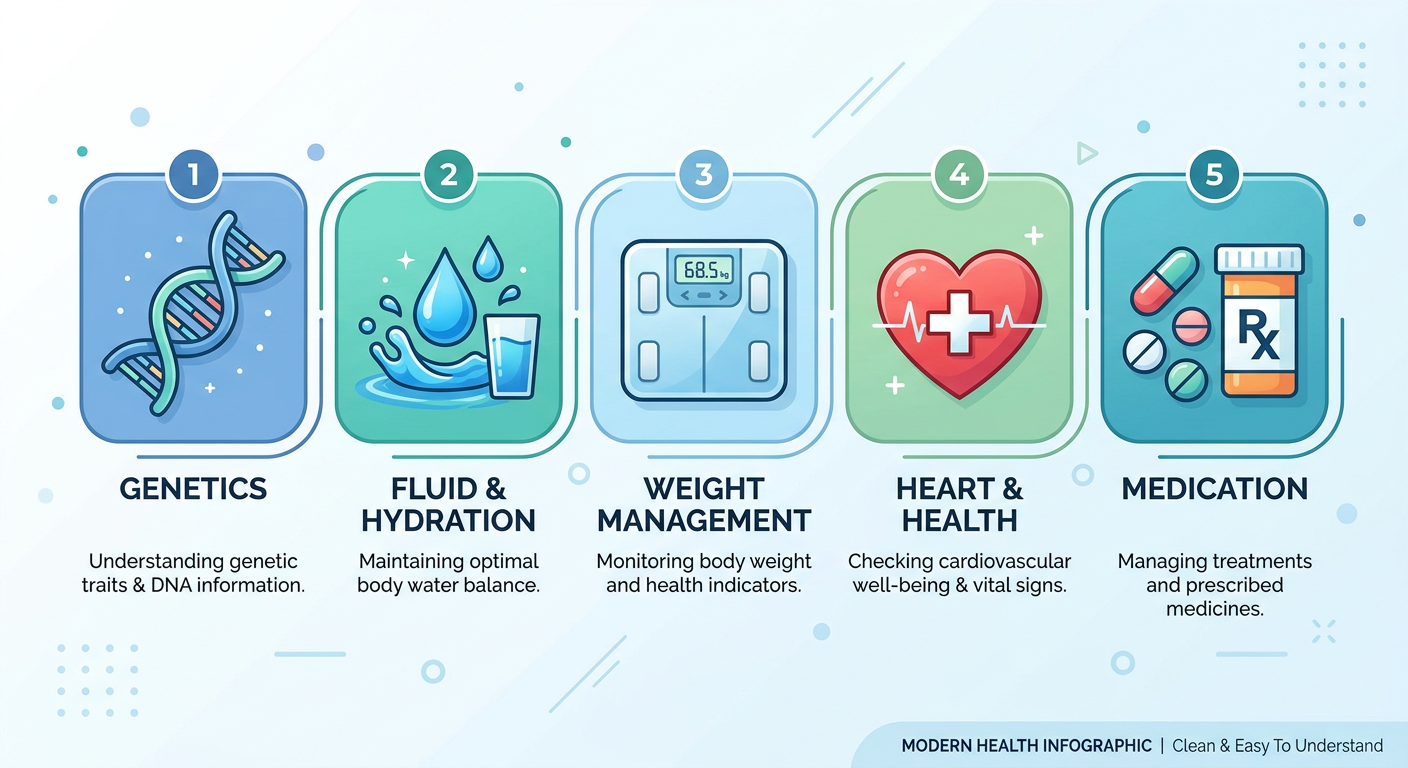
This is where most people get stuck. They try exercises and diets and nothing seems to change the shape of their ankles. That happens because they are targeting the wrong cause.
Here are the five main reasons cankles develop.
1. Genetics and Bone Structure
Some people are simply built with less ankle definition. Their bones are wider, or their bodies store fat in the lower leg area. This is not a health problem. It is anatomy.
No amount of exercise will change your bone structure. And fat does not always reduce evenly across the body. You can lose 30 pounds and still have thick ankles if that is where your genetics store fat.
This is frustrating to hear. But it is honest.
2. Fluid Retention (Edema)
This is the most common medical cause of ankle thickness. When your body holds excess fluid (a condition called oedema), it tends to pool in the lower legs due to gravity.
According to the Mayo Clinic, edema (the medical word for fluid swelling) in the ankles and feet is one of the most common reasons people visit their doctor. It can happen because of:
- Sitting or standing for long periods
- Eating too much sodium
- Hormonal changes, including during your menstrual cycle
- Pregnancy
- Hot weather
- Certain medications
The good news is that fluid-related cankles often respond well to lifestyle changes. We will cover those steps in detail below.
3. Weight Gain
Extra body fat can deposit in the lower leg and ankle area. This is more common in some body types than others. It does not mean you are unhealthy. But it does mean that overall fat loss, not ankle-specific exercises, is what creates change.
You cannot spot-reduce fat. That is a well-established fact in exercise science. When you lose fat, your body decides where it comes from. But overall fat loss does eventually affect every area, including the ankles.
4. Medical Conditions
This is the cause people most need to know about and most often ignore.
Several health conditions cause ankle swelling as a direct symptom. These include:
- Heart failure — When the heart does not pump efficiently, fluid backs up in the legs
- Kidney disease — The kidneys regulate fluid balance. When they struggle, fluid builds up in the body
- Thyroid problems — An underactive thyroid (hypothyroidism) can cause fluid retention throughout the body
- Venous insufficiency — This happens when the valves in the leg veins stop working properly, causing blood and fluid to pool in the lower legs. The Society for Vascular Surgery estimates that venous insufficiency affects up to 40% of the US population to some degree.
- Lymphedema — A condition where the lymphatic system is damaged or blocked, causing fluid to build up in the tissues
These conditions need medical treatment. Exercises and diet changes alone will not fix them.
5. Medications
Some common prescription drugs cause fluid retention as a side effect. The Mayo Clinic specifically lists these:
- Calcium channel blockers (used for blood pressure, like amlodipine)
- Corticosteroids (steroids)
- Some antidepressants and antipsychotic medications
- Certain diabetes medications
If your ankle swelling started around the same time you began a new medication, tell your doctor. They may be able to adjust your dose or switch you to something else.
Cankles vs. Swollen Ankles — What Is the Difference?
This is a question most articles skip. And it is one of the most important ones.
Structural cankles stay the same. Your ankle looks thick in the morning. It looks thick in the evening. It has looked that way for as long as you can remember. The shape does not really change based on what you ate or how much you walked.
Fluid-related ankle swelling changes through the day. You might wake up with ankles that look normal and end the day with them feeling tight and puffy. Your socks leave deep marks on your skin. Your shoes feel tighter by afternoon.
Here is a simple self-check you can do right now.
Press your thumb firmly into the skin just above your ankle bone. Hold it there for 15 seconds. Then let go and look at the spot.
If the skin springs back quickly, that is a good sign. There is no significant fluid pooling there.
If the skin stays dented for several seconds, that is called pitting edema. This is a sign of fluid buildup and something you should mention to your doctor. This test is used by medical professionals as a basic assessment tool. The Cleveland Clinic describes it as a standard physical exam technique.
Now here is something you must take seriously.
If one ankle is swollen and the other is not, and the swollen leg also feels warm, looks red, or is painful, stop reading and call a doctor or go to urgent care. This combination of symptoms can indicate a deep vein thrombosis (DVT), which is a blood clot in the leg. The CDC reports that DVT affects approximately 900,000 Americans every year. It can be life-threatening if the clot moves to the lungs.
Do not wait on this one.
When Should You See a Doctor About Cankles?
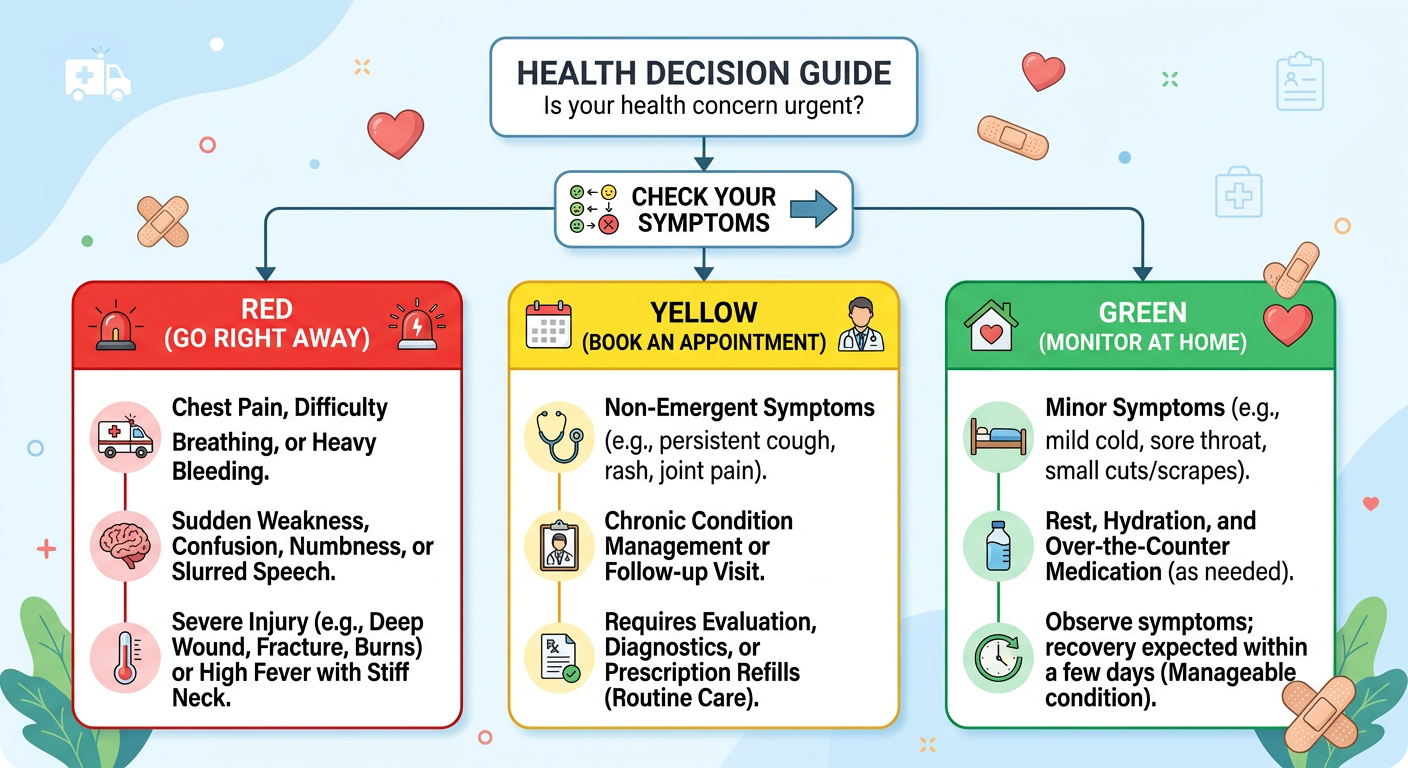
Not every pair of thick ankles needs a doctor. But some do. Here is a clear guide.
Go to the Doctor or Urgent Care Right Away If:
- Only one leg is swollen
- The swollen leg is red, warm, or painful
- Swelling came on suddenly within hours or days
- You have shortness of breath along with the swelling
- You feel chest pain or pressure with the swelling
- The skin over the swollen area looks shiny, tight, or is weeping fluid
These symptoms together can indicate DVT, heart failure, or a pulmonary embolism (blood clot in the lung). These are emergencies.
Book an Appointment Soon If:
- Swelling is in both legs and has been there for more than a week. This can indicate heart-related fluid retention.
- You just started a new medication and noticed ankle swelling shortly after
- You have a known heart, kidney, or thyroid condition and your ankle swelling has gotten worse
- You press on your ankle skin and it stays dented (pitting edema)
- You feel pain or heaviness in your legs that gets worse by evening
You Can Monitor at Home If:
- Your ankles have always looked this way and nothing has changed
- Mild puffiness shows up only after a long day of standing or sitting and goes away after elevating your legs
- You recently ate a very salty meal and noticed temporary puffiness the next day
- You are pregnant and have mild swelling in both ankles (still worth mentioning to your OB at your next appointment)
When you go to the doctor, bring a log. Write down when the swelling is worst, what makes it better, what makes it worse, and every medication and supplement you take. This helps your doctor narrow down the cause faster.
How to Reduce Cankles — What Actually Works in 2026
Here is the part most people came for. And the honest answer is: what works depends on why your cankles are happening.
If they are structural, meaning genetics and bone shape, no lifestyle change will alter your bone structure. But improving your body composition and circulation can make a visible difference in the appearance of your lower legs.
If they are fluid-related, several proven strategies work well and often show results within days to weeks.
For Fluid-Related Cankles
Cut your sodium intake.
This is the single most effective first step for most people. High sodium causes your body to hold onto water. The American Heart Association recommends staying under 2,300mg of sodium per day. The average American eats closer to 3,400mg daily.
Cutting sodium does not mean eating bland food. It means checking labels, eating fewer processed and packaged foods, and cooking more at home. Many people notice a visible reduction in ankle puffiness within a few days of lowering sodium. Use an app like MyFitnessPal to easily track your sodium intake.
Elevate your legs.
When you sit or stand all day, gravity pulls fluid into your lower legs. Counteract this by lying down and raising your legs above the level of your heart for 15 to 30 minutes. Do this once a day, especially in the evening.
You do not need any equipment. A stack of pillows works fine.
Move every 30 to 60 minutes.
Long periods of sitting or standing without moving is one of the most common reasons for ankle swelling. Set a timer. Every 45 minutes, take a 5 to 10 minute walk. Even walking to the kitchen and back helps pump fluid out of your lower legs.
The calf muscles act like a pump for your veins. When you move, they squeeze blood and fluid back up toward your heart. When you sit still, that pump stops working.
Wear compression socks.
Graduated compression socks apply gentle pressure to your ankles and lower legs. This helps push fluid back up and prevents it from pooling. For mild swelling, a compression level of 15 to 20 mmHg is usually enough.
A 2021 review in the Journal of Vascular Surgery found that compression therapy significantly reduced leg edema in patients with chronic venous insufficiency.
You can find compression socks on Amazon or at most pharmacies. Brands like Physix Gear, CEP Compression, and Sockwell are widely reviewed and available. Make sure you follow the sizing guide on the packaging. The wrong size will not work properly.
Drink more water.
This sounds like the opposite of what you should do when you are already holding water. But dehydration signals your body to hold onto fluid as a protective response. Staying well hydrated actually helps your kidneys flush out excess sodium and water.
Aim for 8 cups (64 ounces) of water per day as a baseline. More if you are active or in a hot climate.
For Structural or Weight-Related Cankles
Work on overall fat loss, not spot reduction.
You cannot target fat loss in your ankles. But losing body fat overall through a combination of a mild caloric deficit and regular activity will eventually reduce fat in the lower legs too.
A sustainable approach is reducing your daily calorie intake by 300 to 500 calories and increasing your daily movement. This is not about crash dieting. Slow and steady fat loss is more permanent and healthier for your body.
Use an app like MyFitnessPal to track your food intake. It also tracks sodium, which is useful for the fluid-retention strategies above.
Build lower leg muscle.
You cannot shrink your ankle bones, but you can build muscle in the calf and lower leg area. More muscle means better definition and improved shape. It also improves circulation.
Exercises that help include:
- Calf raises — Stand with feet flat. Rise up onto your toes slowly. Lower back down. Do 3 sets of 15 to 20 reps. You can do these anywhere.
- Ankle circles — Sit and rotate your feet in circles, 10 times in each direction. This improves joint mobility and circulation.
- Resistance band foot flexes — Sit with your legs out. Wrap a resistance band around your feet. Flex and point your feet against the band. This works the muscles around the ankle.
- Walking — Walking 8,000 to 10,000 steps daily has been shown by NIH-cited research to improve venous circulation in the lower legs. It is free and requires no gym.
- Cycling and swimming — Both activate the lower leg muscles and support circulation without putting heavy impact on the joints.
Be honest with yourself about what exercise can and cannot do. If your ankle shape comes from bone structure, no exercise will change the bones. But building muscle and improving circulation will change the overall look of your lower legs over time. That is a real, achievable result worth working toward.
Quick Start Plan for This Week
Do not try to change everything at once. Start here:
- Cut one high-sodium food from your daily routine (chips, canned soups, fast food)
- Take a 20-minute walk every day
- Elevate your legs for 20 minutes each evening
- Drink one extra glass of water per day
These four steps cost nothing. And most people who stick with them for two weeks notice a real difference in how their ankles look and feel.
Style Tips That Can Help Right Now
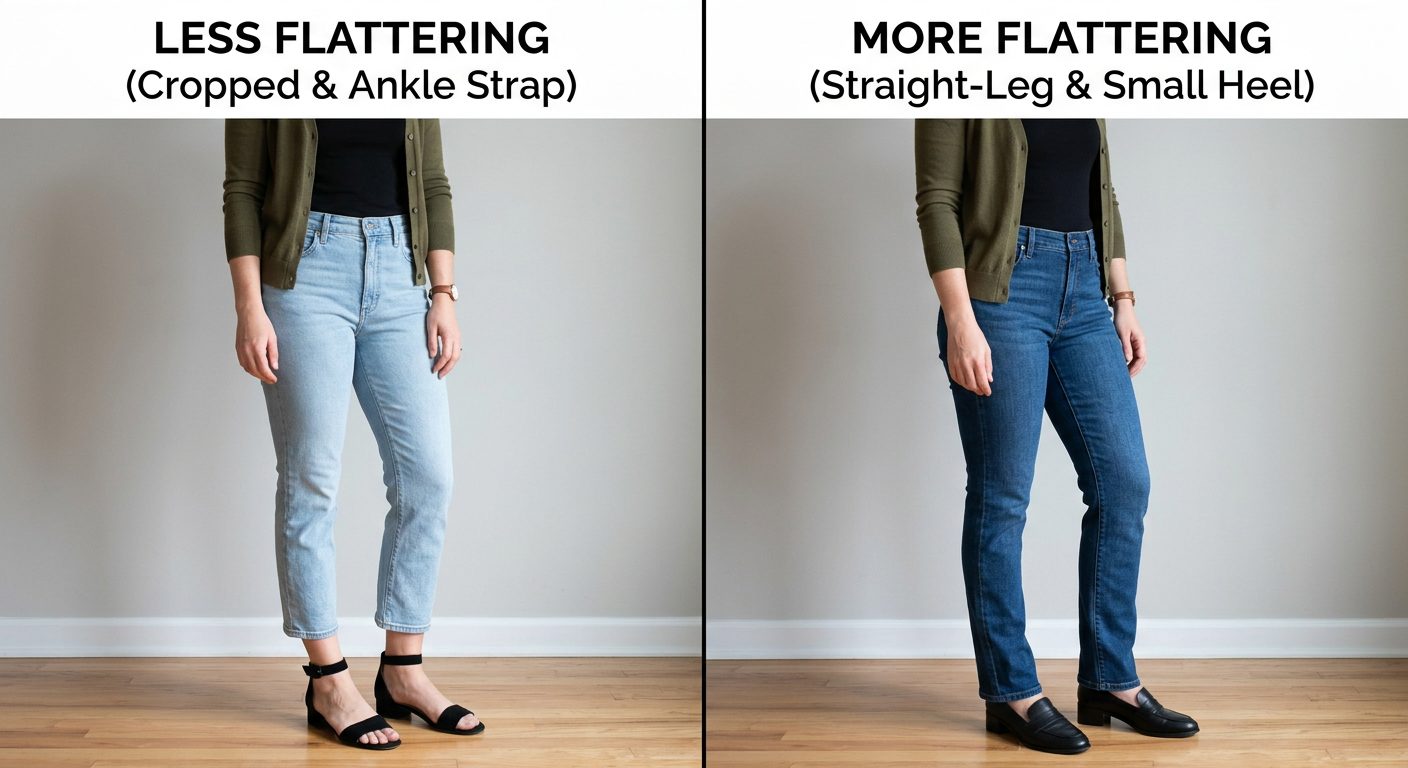
You do not have to change how you dress. But if certain clothing choices make you feel more confident while working on other goals, this information is worth having.
Shoes that help:
A small heel of 1 to 2 inches creates the illusion of a longer, leaner lower leg. Pointed or round-toe shoes also elongate the look of the leg. Avoid ankle strap shoes and sandals. The strap cuts across the widest part of your ankle and draws the eye directly there.
Pants and skirts:
Straight-leg and wide-leg pants flow past the ankle, drawing attention away from the lower leg. Avoid cropped pants that end right at the ankle. They frame the ankle and make it the visual focus. Flared or boot-cut styles also work well.
Colours and patterns:
Dark solid colors on the lower leg reduce visual bulk. Busy patterns or light colors on the lower half of the body draw attention there.
These are tools, not rules. Wear what makes you feel good. But if these tips help you feel more comfortable and confident while you work on your health goals, use them.
The Body Image Part — Let’s Be Honest
The word “cankles” was originally used as an insult. That matters, and it is worth saying directly.
Many people who search this topic are not just looking for health information. They feel embarrassed about their legs. They have heard comments from other people. And have seen posts on social media that made them feel like their bodies are wrong.
TikTok videos tagged with “cankles” have accumulated millions of views. Some are funny. Some offer fitness advice. And some just make people feel bad about a body part they cannot easily change.
Here is something true: the shape of your ankles is often genetic. It is not a sign of laziness. It is not a failure of willpower. Many fit, healthy, active people have thick ankles. The look you see in magazines or on fitness influencers is often the result of specific camera angles, good lighting, and genetics that favour ankle definition.
Working on your health to feel strong, move well, and reduce swelling is a great reason to make changes. Working on your health because a trending insult made you feel ashamed of your body is a different thing. It is worth knowing the difference.
If thinking about your body has started to affect your daily life, your eating habits, or your mental health, that is worth talking to someone about. The National Eating Disorders Association (NEDA) offers a helpline and online resources at nationaleatingdisorders.org. The Body Dysmorphic Disorder Foundation also has helpful resources at bdd.iocdf.org.
Your legs carry you through your life. That is worth a lot more than a trending word on the internet.
What You Now Know About Cankles
Here is a quick summary of everything covered in this article.
Cankles describe a thick or undefined area between the calf and ankle. The cause can be structural (genetics, bone shape) or fluid-related (edema from various causes).
Fluid-related cankles often respond to reducing sodium, drinking more water, elevating your legs, moving more throughout the day, and wearing compression socks.
Structural cankles can be improved through overall fat loss and lower-leg strength training, though the bone structure itself will not change.
Some ankle swelling is a medical concern. If swelling is sudden, only in one leg, accompanied by pain or redness, or paired with shortness of breath, see a doctor right away.
The word “cankles” carries a lot of cultural baggage. Work on your health for your health. Not because someone made up a mean word for your ankle shape.
If your ankles have always looked this way and nothing else has changed, bring it up at your next regular checkup. If swelling started recently or came on quickly, call your doctor this week. And if it is simply your body shape? Start with the four steps in the quick start plan above, give it two weeks, and see how you feel.
Now you know what cankles are, what causes them, and what you can actually do about them.