
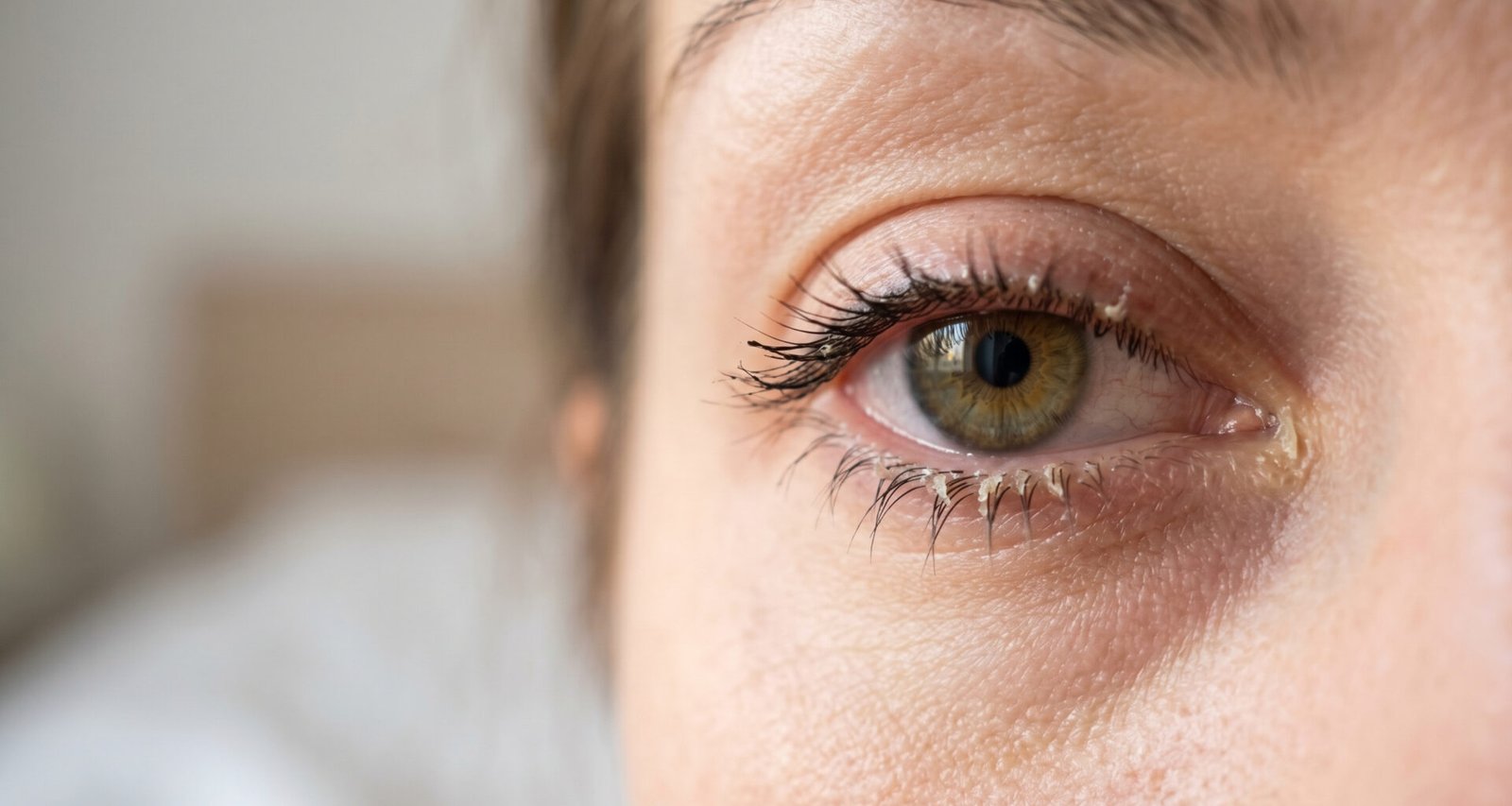
You wake up and reach for your eyes. They feel sticky and gross. You stumble to the bathroom mirror and see the crusty buildup around your eyelids.
Sound familiar?
You’re not alone. Millions of people deal with this every single morning. And it’s annoying.
The good news? You can fix this problem. Most of the time, crusty eyes happen because of simple things you can change today.
This guide shows you exactly what causes those crusty eyes and how to prevent them. You’ll learn 12 easy methods that actually work. By the end, you’ll know exactly what to do tonight so you can wake up with fresh, clean eyes tomorrow.
Let’s fix this.
What Is Eye Crust Anyway?
That crusty stuff has a name. Doctors call it rheum. Most people just call it eye boogers or sleep.
Here’s what it actually is:
Your eyes make a mixture of mucus, oil, skin cells, and other tiny bits throughout the day. This mixture helps protect your eyes and keep them clean. Think of it like your eyes taking out the trash.
During the day, you blink. A lot. Every blink washes this stuff away through your tear ducts. You never notice it.
But when you sleep, you stop blinking. All that protective gunk stays put. It builds up in the corners of your eyes and along your eyelashes. When it dries out overnight, it turns crusty.
This is totally normal.
Your eyes are basically self-cleaning machines. The crust is just proof that the cleaning system works.
When Eye Crust Is Normal vs. When It’s Not
A little bit of crust in the morning? That’s fine. Your eyes are healthy.
But sometimes eye crust means something else is going on. Here’s how to tell the difference:
Normal eye crust:
- Small amount in the corners of your eyes
- Whitish or light colored
- Dries and flakes off easily
- No pain or redness
- Goes away after you wash your face
Not normal eye crust:
- Thick, sticky discharge all day long
- Yellow or green color
- So much that it glues your eyes shut
- Comes with pain, itching, or burning
- Red, swollen eyelids
- Blurry vision
If your eye crust looks abnormal, skip to the section about seeing a doctor. You might need medical help.
For everyone else, let’s talk about why this keeps happening.
Why Do You Get Crusty Eyes?
Your eyes get crusty for tons of reasons. Some are no big deal. Others need attention.
Normal Reasons Your Eyes Get Crusty
You sleep.
That’s it. When you sleep, your eyes make less tears. The tears you do make don’t drain as well. Everything pools up and dries out.
Some people make more eye gunk than others. That’s just how their bodies work.
How you sleep matters too.
Sleep on your side with your face smashed into the pillow? You might get more crust on that side. The pillow blocks drainage and keeps things trapped.
Your Environment Makes It Worse
Dry air is a huge problem.
When the air is dry, your tears evaporate faster. Your eyes try to make up for it by producing more mucus. More mucus equals more crust.
This happens a lot in winter when you’re running the heat. It also happens if you sleep with a fan blowing on your face.
Allergens mess with your eyes.
Pollen, dust, pet hair, mold. All of these make your eyes produce extra mucus to protect themselves. That extra mucus becomes extra crust.
Air quality issues count too.
Smoke, pollution, strong perfumes. These irritate your eyes and trigger more mucus production.
Your Habits Could Be the Problem
Sleeping in makeup.
This is terrible for your eyes. Mascara, eyeliner, and eyeshadow mix with your natural eye secretions. They create thick, crusty buildups that are way worse than normal.
Makeup also clogs the tiny glands along your eyelids. These glands make oils that keep your tears from evaporating. When they’re blocked, you get dry eyes and more crust.
Wearing contacts too long.
Contacts reduce oxygen to your eyes. They also collect protein deposits and bacteria. Both of these make your eyes produce more discharge.
Sleeping in contacts? Even worse. You’re basically asking for crusty eyes.
Not cleaning your eyelids.
Dead skin cells and bacteria build up on your eyelids and eyelashes. This buildup irritates your eyes and creates more discharge.
Too much screen time.
Staring at screens makes you blink less. Less blinking means drier eyes. Drier eyes make more mucus to compensate.
Not drinking enough water.
Your whole body needs water, including your eyes. When you’re dehydrated, your tear quality suffers.
Medical Reasons for Extra Eye Crust
Sometimes crusty eyes mean you have a condition that needs treatment.
Blepharitis means your eyelids are inflamed. The tiny oil glands at the base of your eyelashes get clogged or infected. You wake up with crusty, stuck-together eyelashes. Your eyelids might feel itchy or burning.
Conjunctivitis (pink eye) is an infection or inflammation of the clear covering over your eyeball. It makes tons of discharge. Your eyes look pink or red. It can spread to other people.
Dry eye syndrome sounds backwards, but dry eyes actually make more mucus. Your eyes try to protect themselves by making thick, stringy discharge.
Meibomian gland dysfunction happens when the oil glands in your eyelids don’t work right. Without proper oils, your tears evaporate too fast. More mucus forms to make up for it.
Allergies make your eyes itchy, watery, and crusty. Seasonal allergies are the worst for this.
Blocked tear ducts prevent drainage. Everything backs up and crusts over.
Styes are infected bumps on your eyelid. They produce extra discharge and crust.
If you think you have any of these conditions, see a doctor. Home remedies won’t fix infections or blocked ducts.
12 Ways to Stop Waking Up with Crusty Eyes
Ready to fix this? Here are 12 methods that actually work.
You don’t need to do all of them. Pick two or three that fit your situation. Give them at least a week to work.
1: Clean Your Eyelids Every Day
This is the single best thing you can do.
Your eyelids collect oil, dead skin, and bacteria all day. Cleaning them removes all that junk before it builds up overnight.
Here’s how to do it:
- Wash your hands first. Always.
- Wet a clean washcloth with warm water. Not hot. Just warm and comfortable.
- Close your eyes and put the warm washcloth over them for 30 seconds. This softens any crust and loosens oils.
- Gently wipe from the inner corner to the outer corner of your eye. Use a different part of the cloth for each eye.
- For a deeper clean, put a tiny drop of baby shampoo on your fingertip. Close your eye and gently massage it along your eyelid and lashes. Rinse well.
- Pat dry with a clean towel.
Do this twice a day. Once in the morning, once before bed.
You can also buy special eyelid wipes. Look for ones that say “lid scrubs” or “eyelid cleanser.” They’re pre-moistened and easy to use. Good for lazy nights when you don’t want to do the whole routine.
2: Always Remove Your Makeup Before Bed
Every. Single. Night.
No excuses. Sleeping in eye makeup is one of the worst things you can do.
The right way to remove eye makeup:
- Use a makeup remover made for eyes. Regular face cleanser doesn’t cut it for waterproof mascara.
- Soak a cotton pad with the remover. Hold it against your closed eye for 10 seconds. This dissolves the makeup.
- Gently wipe away. Don’t rub hard.
- Wash your face with your regular cleanser.
- Do the eyelid cleaning routine from Method 1.
Keep makeup remover wipes on your nightstand. On nights when you’re super tired, you can at least do a quick wipe before you pass out.
Pro tip: Throw out old eye makeup. Mascara should go after three months. Eyeliner after a year. Old makeup grows bacteria that causes infections and extra crust.
3: Take Care of Your Contact Lenses
Contacts are great. But they require work.
Follow these rules:
Never sleep in your contacts unless your doctor specifically says it’s okay. Even then, it’s risky.
Clean them every single time you take them out. Use proper contact lens solution, not water.
Replace them on schedule. If they’re monthly lenses, change them every month. Not “about a month” or “when they feel bad.” Every month.
Give your eyes a break. Wear glasses at least one day a week.
If your eyes produce a lot of crust, consider switching to daily disposable lenses. You throw them out every night. No cleaning, no bacteria buildup.
Wash your hands before touching your contacts or eyes.
Replace your contact lens case every three months. Cases grow bacteria that gets transferred to your lenses.
4: Fix the Air in Your Bedroom
Dry air is a huge cause of crusty eyes.
Get a humidifier.
A humidifier adds moisture to the air. This keeps your tears from evaporating too fast at night.
You want the humidity levels in your bedroom between 30% and 50%. You can buy a cheap humidity meter (called a hygrometer) to check.
Place the humidifier near your bed but not right next to your face. Clean it once a week to prevent mold.
Use distilled water in your humidifier, not tap water. Tap water has minerals that can spray into the air and irritate your eyes.
Clean your bedroom air.
Dust your bedroom weekly. Vacuum with a HEPA filter if you can.
Wash your sheets and pillowcases in hot water every week.
If you have pets, keep them out of your bedroom. Or at least off your bed. Pet dander makes allergies worse.
Consider an air purifier with a HEPA filter. This removes allergens from the air while you sleep.
Don’t sleep with a fan blowing directly on your face. This dries out your eyes even with a humidifier running.
5: Drink More Water
Your tears are made of water. Not enough water in your body means poor quality tears.
Most people need about eight glasses of water a day. More if you exercise or live somewhere hot.
Here’s an easy test: Look at your pee. If it’s dark yellow, you need more water. Light yellow or clear means you’re good.
Tips to drink more water:
Keep a water bottle with you all day.
Drink a glass right when you wake up.
Set reminders on your phone.
Eat water-rich foods like cucumbers, watermelon, and oranges.
Cut back on caffeine and alcohol. Both dehydrate you.
6: Control Your Allergies
Allergies make your eyes produce tons of extra mucus.
Figure out what you’re allergic to.
Common culprits include pollen, dust mites, pet dander, and mold.
Pay attention to when your eyes get worse. Spring allergies mean pollen. Year-round problems might mean dust mites or pets.
You can get tested by an allergist if you’re not sure.
Once you know your triggers:
Keep windows closed during high pollen days. Use air conditioning instead.
Buy allergen-proof covers for your pillows and mattress. These keep dust mites trapped.
Wash your bedding in hot water every week. Water needs to be at least 130°F to kill dust mites.
Shower before bed during allergy season. This washes pollen out of your hair before it gets on your pillow.
Take allergy medicine. Over-the-counter options like cetirizine or loratadine work well for most people. Take them before bed if your symptoms are worse in the morning.
Use eye drops made for allergies. Look for ones with antihistamines.
7: Use Eye Drops the Smart Way
Artificial tears can help prevent crusty eyes.
Put a few drops in each eye right before bed. This gives your eyes extra moisture overnight.
Which eye drops to buy:
Look for “preservative-free” on the label. Preservatives can irritate your eyes with regular use.
Get the ones in single-use vials. They’re sterile and last longer.
Avoid “redness relief” drops for daily use. These can make problems worse over time.
If you have thick, stringy discharge, try gel drops. They’re thicker and last longer.
For really dry eyes, use eye ointment at night. Warning: this will blur your vision, so only use it right before sleep.
How to put in eye drops correctly:
- Wash your hands.
- Tilt your head back.
- Pull your lower eyelid down gently to make a pocket.
- Look up. Squeeze one drop into the pocket. Don’t let the bottle tip touch your eye.
- Close your eye for a minute. Don’t blink hard or squeeze.
- Wipe away any extra with a clean tissue.
8: Change How You Sleep
Your sleep position affects eye drainage.
Sleeping on your stomach or side can trap discharge. The pillow blocks natural drainage.
Try these changes:
Sleep with your head slightly raised. Use an extra pillow or raise the head of your bed a bit. This helps fluids drain better.
If you must sleep on your side, switch sides regularly.
Change your pillowcase at least twice a week. More if you have oily skin or allergies. Dirty pillowcases are covered in bacteria, oil, and dead skin cells.
Use pillowcases made of silk or satin. These are smoother and collect less gunk than cotton. They also don’t absorb moisture from your face.
Wash your pillows themselves every few months. Follow the care instructions on the tag.
Consider hypoallergenic pillows if you have allergies.
9: Cut Down on Screen Time
Screens make you blink less. You might blink 15 times per minute normally. When staring at a screen, it drops to 5 times per minute.
Less blinking means drier eyes. Drier eyes make more mucus.
Follow the 20-20-20 rule:
Every 20 minutes, look at something 20 feet away for 20 seconds.
This gives your eyes a break and reminds you to blink.
Other screen tips:
Position your screen slightly below eye level. Looking down helps keep your eyes more closed, reducing evaporation.
Use artificial tears during long screen sessions.
Turn down screen brightness. Super bright screens strain your eyes.
Stop using screens at least an hour before bed. The blue light can mess with your sleep anyway.
If you wear glasses, ask about lenses with anti-reflective coating. These reduce glare and eye strain.
10: Take Omega-3 Fatty Acids
Omega-3s help your eyes make better quality tears.
Better tears mean less dryness and less crusty buildup.
How to get more omega-3s:
Eat fatty fish twice a week. Salmon, sardines, mackerel, and tuna are all great.
Add ground flaxseeds to your breakfast. One tablespoon a day helps.
Snack on walnuts.
Take a fish oil or algae oil supplement. Look for ones with at least 1000mg of EPA and DHA combined. Take it with food.
It takes about 4-6 weeks to notice a difference. Keep at it.
11: Keep Your Hands Away from Your Eyes
Touching your eyes transfers bacteria from your hands to your face.
This bacteria causes irritation and infection. Both lead to more discharge.
Break the touching habit:
Notice when you rub your eyes. Usually it’s when you’re tired or your eyes itch.
If your eyes itch, use a clean tissue or washcloth instead of your fingers.
Wash your hands before doing anything with your eyes. This includes putting in contacts, applying eye drops, or cleaning away crust.
Keep your nails short and clean. Long nails trap more bacteria.
If you wear makeup, wash your hands before and after applying it.
12: See Your Eye Doctor Regularly
Get your eyes checked once a year. Twice a year if you wear contacts.
Eye doctors can spot problems early. They can diagnose conditions like blepharitis or dry eye syndrome before they get bad.
They’ll also clean your eyelids professionally. This removes buildup you might miss at home.
Plus, they can make sure your glasses or contact prescription is right. The wrong prescription makes you strain, which leads to eye fatigue and dryness.
Your Morning Eye Care Routine
You still wake up with some crust even after following prevention methods. That’s okay.
Here’s how to clean it off safely.
The Right Way to Remove Eye Crust
Don’t pick at it with your fingers.
This is super tempting. Don’t do it. Your fingers have bacteria. Plus, picking can hurt the delicate skin around your eyes.
Here’s what to do instead:
- Wash your hands with soap and water.
- Wet a clean washcloth with warm water. Warm water softens the crust.
- Close your eyes. Hold the warm washcloth over them for 30 seconds.
- Gently wipe from the inner corner toward the outer corner. The crust should come off easily.
- Use a different part of the washcloth for each eye. This prevents spreading bacteria.
- If the crust is really stuck, don’t force it. Hold the warm cloth there longer. Add more warm water.
- Rinse your face with cool water when done.
Never use your shirt, toilet paper, or dirty tissues. These can scratch your eye or add more bacteria.
Quick Refresh Tips
Cold compress for puffiness.
After cleaning, a cold compress reduces swelling and wakes up tired eyes.
Wet a clean washcloth with cold water. Hold it over closed eyes for a few minutes.
You can also use chilled cucumber slices. Do they actually work? Sort of. The cold helps with puffiness. The cucumber itself doesn’t do much special, though.
Try eye drops.
A drop or two of artificial tears in the morning feels refreshing. It also washes away any remaining tiny particles.
Gentle massage.
After cleaning, gently massage your closed eyelids with your fingertips. Use tiny circles. This stimulates the oil glands and helps tear production.
Start at the inner corner and work outward. Do this for 30 seconds on each eye.
When You Need to See a Doctor
Sometimes crusty eyes mean something serious.
Get medical help if you have:
Yellow or green discharge that’s thick and sticky. This usually means infection.
So much crust that your eyes are glued shut in the morning. You have to wash them open.
Pain in or around your eyes. Not just mild irritation. Actual pain.
Your vision gets blurry and stays blurry after cleaning your eyes.
Your eyelids are very red and swollen.
Light hurts your eyes more than normal.
You feel like something is stuck in your eye but nothing is there.
Home remedies don’t help after two weeks.
The crust keeps coming back even after treatment.
Only one eye has a problem and it’s getting worse.
Where to go:
Start with your regular eye doctor (optometrist). They can handle most eye problems.
For infections or serious conditions, you might need an ophthalmologist. That’s a medical doctor who specializes in eyes.
If it’s after hours and you have severe pain or vision loss, go to urgent care or the emergency room.
What Happens at the Doctor
The doctor will ask about your symptoms. When did they start? What does the discharge look like? Does anything make it better or worse?
They’ll examine your eyes with a bright light and magnifier. This lets them see your eyelids, lashes, and eyeball up close.
They might flip your eyelid inside out. Sounds gross but doesn’t hurt. This shows them the inside of your eyelid.
Sometimes they’ll take a sample of the discharge. They send it to a lab to check for bacteria.
Based on what they find, they’ll prescribe treatment.
Common Treatments Doctors Prescribe
Antibiotic eye drops or ointment for bacterial infections. You’ll use these several times a day for about a week.
Steroid eye drops for inflammation. These reduce swelling and irritation.
Special eyelid cleansers stronger than what you can buy at the store.
Warm compress routine with specific instructions on temperature and timing.
Prescription artificial tears that work better than over-the-counter options.
For chronic conditions like blepharitis, treatment takes months. You’ll need to stick with a daily cleaning routine forever.
The good news? Most eye crust problems respond well to treatment.
Special Cases You Should Know About
Crusty Eyes in Kids
Babies and young kids get crusty eyes a lot.
Babies are often born with underdeveloped tear ducts. The ducts open up on their own by age one. Until then, you’ll see crusty eyes daily.
How to care for a baby’s crusty eyes:
Use a clean, warm, wet cloth. Gently wipe from inner to outer corner.
Do this several times a day.
Gently massage the area between the eye and nose. This can help open the tear duct.
If the discharge is yellow or green, or if the eye looks red, call your pediatrician.
For older kids:
Teach them not to touch their eyes.
Make sure they wash their hands regularly.
Clean their eyes gently if they can’t do it themselves.
Kids with allergies need daily allergy medicine during their bad seasons.
Pink eye spreads like crazy in schools and daycares. If your kid has pink eye, keep them home until the doctor says they’re not contagious.
Crusty Eyes as You Get Older
Eyes change with age.
Older adults make fewer tears. The tears they do make are lower quality.
The oil glands in eyelids don’t work as well. This leads to faster tear evaporation.
If you’re over 60:
You’ll probably need artificial tears daily. Keep them with you.
Clean your eyelids twice a day, every day.
Stay extra hydrated.
Many medications cause dry eyes as a side effect. Talk to your doctor if you started a new medicine and your eyes got worse.
Consider punctal plugs. These are tiny plugs that block your tear ducts so tears stay on your eyes longer. Your eye doctor can put them in during a regular visit.
Seasonal Changes
Your eyes might get worse at certain times of year.
Spring allergies mean pollen. Trees, grass, and flowers all release pollen that irritates eyes. Start taking allergy medicine before your season begins. Don’t wait until you’re miserable.
Summer brings different allergens plus chlorine from pools. Wear goggles when swimming. Rinse your eyes with artificial tears after swimming.
Fall allergies mean ragweed and mold. Mold grows on fallen leaves. Keep leaves raked away from your house.
Winter is terrible for dry eyes. Heating systems dry out indoor air. Cold outdoor air is also very dry. Run your humidifier all winter. Use thicker eye ointments at night.
Products That Actually Help
You don’t need fancy expensive products. But some things work better than others.
Best Eyelid Cleansers
OCuSOFT Lid Scrub Plus comes in pre-moistened pads. Super easy to use. Good for daily cleaning.
Sterilid is a foam cleanser. You pump it onto your eyelids and rinse. Works great for makeup removal too.
Baby shampoo (the “no tears” kind) is the cheap option. Mix a tiny drop with warm water. It works fine for most people.
Cliradex uses tea tree oil. Good for people with Demodex mites (tiny bugs that live on eyelashes). More expensive but very effective.
All of these are available at drugstores or online. Start with baby shampoo if you’re on a budget.
Good Humidifiers
Levoit Classic 300S is quiet and holds enough water to run all night. Easy to clean.
Honeywell HCM-350 is a basic but reliable model. No frills but gets the job done.
Pure Enrichment MistAire is small and cheap. Good for a single bedroom.
Look for:
- Easy to clean (you’ll need to clean it weekly)
- At least 1 gallon capacity for all night use
- Auto shutoff when water runs out
- Adjustable mist settings
Artificial Tears That Work
Refresh Optive (preservative-free) works for most types of dry eye. Good all-around choice.
Systane Ultra is thicker. Better if you have really dry eyes.
Blink Tears are lighter and more watery. Good for mild dryness.
GenTeal Severe Gel Drops are very thick. Use these before bed.
Refresh PM is an ointment. It will blur your vision, so only use at night.
Buy the preservative-free versions in single-use vials. Yes, they cost more. But they won’t irritate your eyes with daily use.
Other Helpful Products
Bruder Moist Heat Eye Compress is a mask you microwave. It stays warm for 10 minutes. Way better than a washcloth that gets cold in 30 seconds.
Sleep masks block light and protect your eyes from dry air. Look for silk or satin ones.
Allergen-proof pillow covers create a barrier between you and dust mites. Get ones that zip completely closed.
Hygrometer measures humidity. You can get one for less than $10. This tells you if your humidifier is actually working.
Common Myths About Eye Crust
Let’s clear up some confusion.
Eye crust always means you have an infection.
False. Most eye crust is completely normal. It’s just part of how your eyes clean themselves at night. Infection has other signs like yellow/green discharge, pain, and redness.
You should never touch your eyes.
This is too extreme. You need to touch your eyes sometimes. To put in contacts. To apply medicine, o clean away crust. The key is washing your hands first.
More eye crust means you slept really well.
Nope. The amount of crust doesn’t say anything about sleep quality. It just means your eyes made a certain amount of discharge that night.
Eye crust only happens to people with bad hygiene.
Wrong. Clean people get crusty eyes too. It’s about biology, not cleanliness. Though good hygiene does help reduce it.
Kids will outgrow crusty eyes.
Sometimes yes, sometimes no. Babies with blocked tear ducts usually outgrow it by age one. But kids with allergies or other conditions won’t outgrow it without treatment.
You can get crusty eyes from someone else.
The crust itself isn’t contagious. But the infections that cause extra crust can spread. Pink eye spreads easily. Wash your hands and don’t share towels or pillows.
Questions People Ask About Crusty Eyes
Is it normal to wake up with crusty eyes every day?
A small amount is normal. If it’s a tiny bit of dried stuff in the corner of your eyes that wipes away easily, you’re fine. If it’s a lot, or if it’s thick and colored, something else is going on.
Can crusty eyes be a sign of something serious?
Sometimes. Excessive discharge with other symptoms like pain, vision changes, or severe redness needs medical attention. But most crusty eyes are harmless.
Why do I only get crusty eyes in one eye?
This usually means something is irritating that specific eye. Maybe you sleep on that side. Maybe that tear duct drains slower. Or maybe you have a mild infection or blocked duct on that side. If it keeps happening, see your doctor.
Does diet affect morning eye discharge?
Yes and no. Diet won’t directly cause or prevent normal eye crust. But eating omega-3s helps your eyes make better tears. Drinking enough water prevents dehydration. Both of these can reduce crust over time.
Can crusty eyes cause vision problems?
Normal crust won’t hurt your vision. It might blur things temporarily until you wash it off. But chronic conditions that cause excess crust, like severe dry eye or infections, can damage your eyes if left untreated.
How long does it take to see improvement with prevention methods?
You should notice some difference within a week. Full improvement might take 4-6 weeks, especially for things like omega-3 supplements. Stick with it.
Are crusty eyes contagious?
The crust itself, no. But infections that cause extra discharge (like pink eye) spread easily through hand contact and shared items.
Can pets cause crusty eyes in humans?
Pet allergies can definitely make your eyes produce more discharge. Pet dander irritates your eyes. The allergens get on your bedding when pets sleep on your bed. This leads to more crust.
What’s the difference between normal and infected eye discharge?
Normal: small amount, whitish, dries and flakes, no other symptoms.
Infected: lots of discharge, yellow or green, thick and sticky, comes with redness and pain.
Can stress cause increased eye crust?
Indirectly, yes. Stress makes some people rub their eyes more. It can also worsen conditions like blepharitis. Plus, stressed people often sleep worse and take worse care of themselves.
Let’s Fix This Tonight
You now know exactly what causes crusty eyes and how to prevent them.
Most cases come down to simple fixes. Clean your eyelids. Remove your makeup. Use a humidifier. Drink water. Take care of your contacts.
Pick two or three methods from this guide. Start them tonight.
Give it a week. Most people see improvement fast.
If you don’t see changes after two weeks, or if things get worse, see your doctor. You might have a condition that needs medical treatment.
The good news? This problem is fixable. You don’t have to wake up with gross, crusty eyes anymore.
Your fresh morning starts tonight with one small change.
What will you try first?