
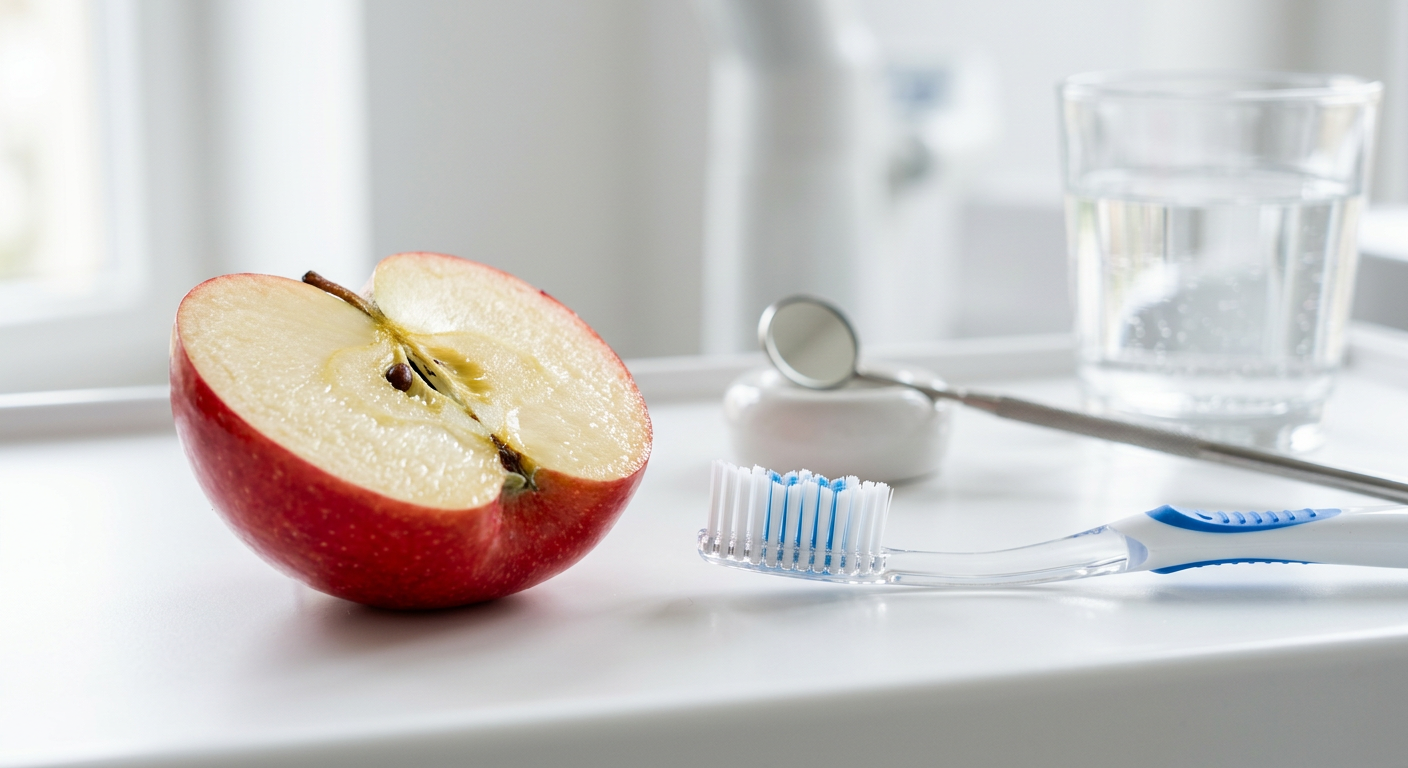
You’ve probably heard someone call apples “nature’s toothbrush.” Maybe your mom told you this when you forgot to brush after lunch. Or maybe you read it somewhere online.
But is it actually true?
The answer is more complicated than yes or no. Apples can help your teeth in some ways. But they can also hurt them in other ways.
Let me explain what really happens when you bite into an apple.
The Good News: How Apples Actually Help Your Teeth
Apples do some helpful things for your mouth. Here’s what they get right.
They Scrub Your Teeth While You Chew
Apples are crunchy and firm. When you chew them, they rub against your teeth like a gentle scrub brush. This can remove some food bits stuck on your teeth.
The rough texture also massages your gums. This keeps them healthy and strong.
But here’s the catch. This scrubbing only cleans the surface. It doesn’t get between your teeth where cavities love to form.
They Make You Produce More Spit
Chewing an apple makes your mouth create more saliva. You might call it spit, and that’s fine.
Spit is actually really important for your teeth. It washes away food particles and bacteria. It also neutralizes acids that attack your tooth enamel.
More spit means a cleaner, healthier mouth. And apples definitely get your spit flowing.
They Give You Vitamins Your Gums Need
Apples contain vitamin C and other nutrients. Your gums need vitamin C to stay healthy and fight off infections.
Healthy gums protect your teeth. They keep bacteria from getting down to the roots.
So eating apples can support your overall mouth health. That part is true.
The Bad News: Why Apples Can Damage Your Teeth
Now let’s talk about the problems. Apples aren’t perfect for your teeth, and dentists want you to know why.
Apples Have a Lot of Sugar
One medium apple has about 19 grams of sugar. That’s natural sugar called fructose, but your teeth don’t care where sugar comes from.
Sugar feeds the bacteria in your mouth. These bacteria create acid as waste. That acid eats away at your tooth enamel.
Your enamel is the hard, protective layer on your teeth. Once it’s gone, it doesn’t grow back.
Apples Are Acidic
Here’s something most people don’t know. Apples themselves are acidic.
The pH of an apple is around 3 to 4. Anything below 7 is acidic. And acid wears down your enamel over time.
This means apples hit your teeth twice. First with their own acid. Then with the acid bacteria make from the sugar.
That’s a double attack on your enamel.
The Acid Can Make Your Teeth Sensitive
When acid wears away your enamel, your teeth become sensitive. You might feel pain when you eat something hot or cold.
You might also notice your teeth looking more yellow. That’s because the white enamel is getting thinner, and the yellow layer underneath starts to show.
This doesn’t happen from one apple. But if you eat lots of acidic foods and don’t protect your teeth, it adds up.
What Dentists Really Think About the “Nature’s Toothbrush” Claim
I talked to several dentists about this. They all said basically the same thing.
Apples are NOT a replacement for brushing your teeth. Not even close.
Dr. Sarah Chen, a dentist in Portland, put it this way: “Apples can help clean your teeth a tiny bit, but so can chewing gum or eating celery. They’re a snack, not a dental tool.”
The scrubbing action is weak compared to a real toothbrush. Apples can’t reach between your teeth. They can’t remove plaque, which is the sticky film that causes cavities.
And because of the sugar and acid, they might actually make things worse if you don’t brush afterward.
The verdict? Apples are a healthy snack. But they don’t clean your teeth well enough to matter.
5 Ways to Eat Apples Without Hurting Your Teeth
You don’t have to stop eating apples. You just need to be smart about it.
Here’s how to enjoy apples while protecting your teeth.
1. Eat Apples With Meals, Not as Snacks
When you eat an apple with other foods, your mouth produces even more saliva. The other foods also help neutralize the acid.
Eating an apple alone means the acid sits on your teeth longer. Eating it with lunch or dinner gives your teeth more protection.
2. Rinse Your Mouth With Water Right After
This is the easiest trick. As soon as you finish your apple, swish some water around your mouth.
This washes away the sugar and dilutes the acid. It takes 10 seconds and makes a real difference.
Don’t skip this step. It’s simple but powerful.
3. Wait 30 Minutes Before Brushing
This sounds backwards, but it’s important. Don’t brush your teeth right after eating an apple.
The acid softens your enamel temporarily. If you brush while it’s soft, you can actually scrub some of it away.
Wait at least 30 minutes. Your saliva will reharden the enamel. Then you can brush safely.
4. Eat a Piece of Cheese After Your Apple
Cheese is amazing for your teeth. It’s high in calcium and protein. It also neutralizes acid really well.
Some studies show that eating cheese after acidic foods protects your enamel. Plus, cheese and apples taste good together.
Keep some cheese cubes handy for after your apple snack.
5. Use a Straw for Apple Juice (Or Skip It Completely)
Apple juice is way worse for your teeth than whole apples. It has all the sugar and acid, but none of the fiber or chewing benefits.
If you do drink apple juice, use a straw. This keeps the juice away from your front teeth.
But honestly, water or milk are much better choices for your teeth.
How Apples Compare to Other Fruits
Maybe you’re wondering if you should eat different fruits instead. Let’s compare.
Better choices for your teeth:
- Strawberries (less acidic, contain enamel whitening properties)
- Pears (less acidic than apples)
- Bananas (low acid, though they stick to teeth more)
Worse choices for your teeth:
- Oranges and grapefruits (very acidic)
- Dried fruits like raisins (super sticky, high sugar concentration)
- Lemons and limes (extremely acidic)
Apples fall somewhere in the middle. They’re not the worst, but they’re not the best either.
The good news? You can eat any fruit safely if you follow the tips above. Rinse with water. Wait before brushing. Eat them with meals.
Apples Are Healthy, But Brush Your Teeth
Here’s what you need to remember.
Apples are good for your body. They have fiber, vitamins, and antioxidants. They make a much better snack than candy or chips.
But they are not good enough to replace brushing and flossing. The whole “nature’s toothbrush” thing is mostly a myth.
Apples can help your teeth a little bit because they make you produce saliva and scrub your teeth gently. But they also have sugar and acid that can damage your enamel over time.
Eat apples. Enjoy them. Just be smart about it.
Rinse with water after eating them. Wait before you brush. Eat them with meals when you can.
And please, keep brushing your teeth twice a day and flossing once a day. That’s what actually keeps your teeth healthy and strong.
Your dentist will thank you. And so will your teeth.