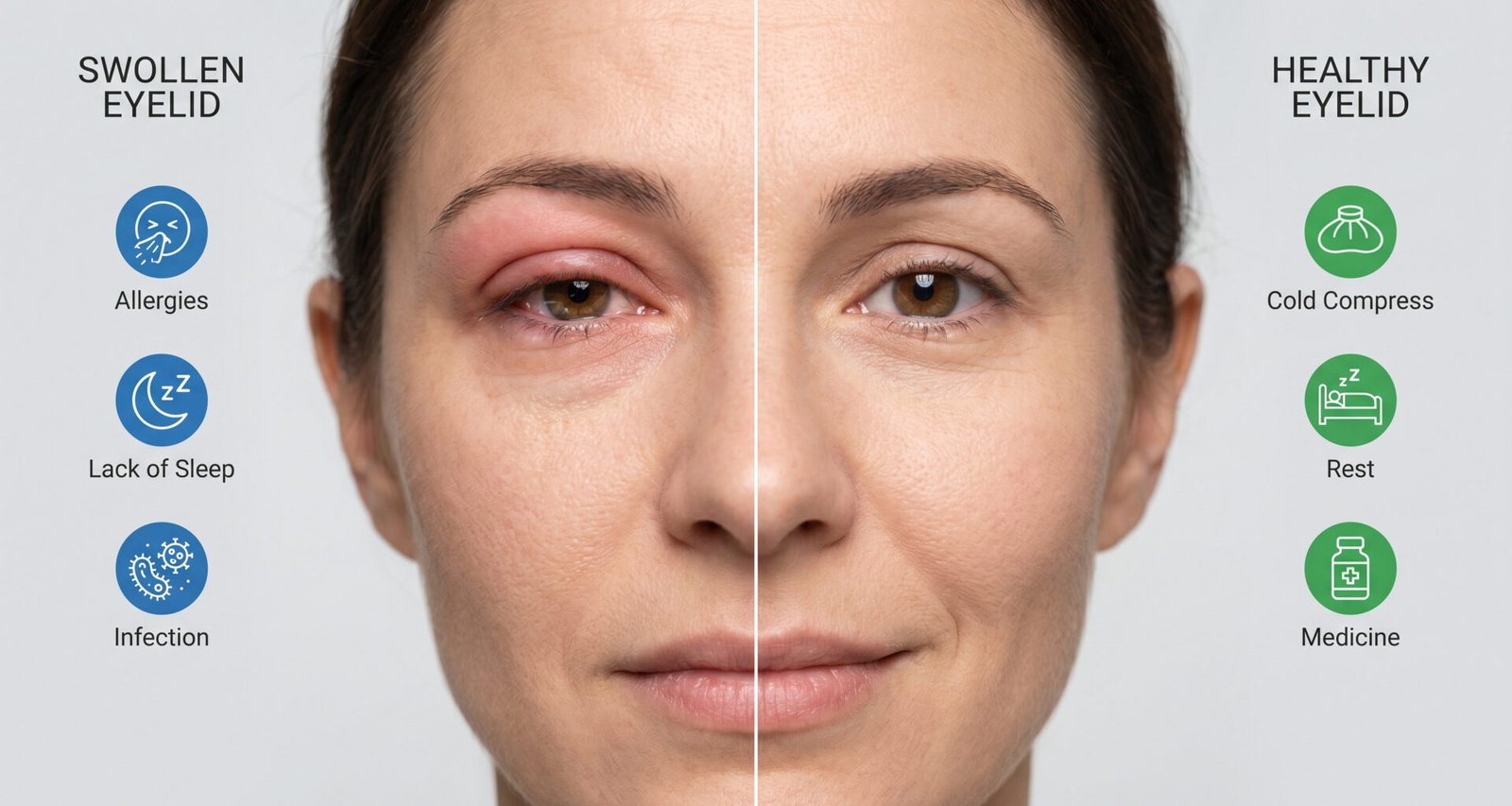
You wake up and look in the mirror. Your top eyelid is puffy and swollen. It looks weird. You might feel worried or embarrassed. The good news is that swollen eyelids happen to lots of people. Most of the time, they go away on their own. But sometimes you need to know what’s causing the swelling so you can fix it.
This guide will help you figure out why your eyelid is swollen. You’ll learn what you can do at home to feel better. And you’ll know when it’s time to call a doctor.
What Does Eyelid Swelling Actually Mean?
Your eyelid is swollen when fluid builds up in that area. The skin around your eye gets puffy and stretched out. This is called edema in medical terms. Your eyelid might feel tight or heavy. You might have trouble opening your eye all the way.
The good news is simple: swelling usually means your body is trying to fix something. Your body sends extra fluid to fight infection or calm down irritation. It’s actually your body helping you. But that doesn’t mean you have to just wait around feeling uncomfortable.
10 Reasons Your Top Eyelid Is Swollen
1. Allergies Are the Most Common Reason
Your body has defenders called immune cells. When you’re allergic to something, these cells overreact. They release a chemical called histamine. This chemical makes your eyelids puff up.
Allergies can come from many things. Pollen in the air makes your eyes itch and swell. Pet fur from dogs or cats causes problems for some people. Dust in your house can trigger swelling. Some people even get allergic reactions from eating certain foods like peanuts or shellfish.
If you have seasonal allergies, you probably get swollen eyelids at certain times of year. Spring brings pollen. Fall does the same thing. You might notice your eyes water and itch too.
What to do: Stay away from what causes your allergies if you can. Wash your hands and face more often. Over-the-counter allergy medicine can help. So can cold compresses on your eyes.
2. You’re Not Getting Enough Sleep
When you don’t sleep well, your body holds onto water. Fluid collects under your eyes and on your eyelids. This makes them puffy. You might notice this especially in the morning after a bad night.
Your body needs sleep to work right. When you’re exhausted, your blood vessels get dilated. That means they get wider. More fluid leaks out into the tissues around your eyes. The result is puffiness that makes you look even more tired.
If you sleep on your stomach with your face in the pillow, you might trap fluid there too. Your eyelids swell because of the pressure.
What to do: Try to get seven to nine hours of sleep each night. Sleep on your back instead of your stomach. Keep your head elevated with an extra pillow. This helps fluid drain away from your face while you sleep.
3. You Have a Stye or Chalazion
A stye is a small bump that forms on your eyelid. Bacteria get trapped in the tiny hair follicles on your eyelid. They multiply and cause infection. Your eyelid swells up and becomes red. It feels tender to touch. You might see a small yellow bump that looks like a tiny pimple.
A chalazion is similar but different. It happens when oil glands in your eyelid get blocked. The trapped oil causes swelling and irritation. A chalazion usually doesn’t hurt as much as a stye. But it can stick around longer.
Both of these are infections. Your body is fighting bacteria or dealing with blocked oil. The swelling is part of that battle.
What to do: Clean your eyelid gently with warm water. Apply a warm compress for ten to fifteen minutes, several times a day. Don’t squeeze or pick at it. If it doesn’t go away in a few weeks, or if it gets worse, see a doctor. They might give you antibiotic ointment or drops.
4. Your Eyes Are Too Dry
This might sound strange. Dry eyes can actually cause swelling. When your eyes don’t have enough moisture, they become irritated. Your body responds by sending extra fluid to the area. That fluid causes puffiness.
You spend hours looking at screens. Phones, computers, and tablets dry out your eyes. The air in your room might be dry too. Air conditioning and heating can pull moisture away. Cold winter air makes it worse.
When your eyes are dry, they itch and burn. You might rub them a lot. All that rubbing causes more irritation and more swelling.
What to do: Take breaks from screens every twenty minutes. Look away from your device. Blink more often on purpose. Use artificial tear drops designed for dry eyes. These drops add moisture your eyes need. A humidifier in your room helps too. It adds moisture to the air.
5. You’ve Been Crying
Crying is a physical response. Your tears contain salt and water. When you cry, your body produces lots of tears. These tears have to go somewhere. Some soak into your eyelids. The salt in tears can cause swelling.
Stress and emotions trigger more than just tears. Your body releases hormones when you’re upset. These hormones can cause inflammation. Inflammation means swelling. Your eyelids are especially sensitive to these changes.
The good news is that this type of swelling almost always goes away quickly. Usually within an hour or two.
What to do: Splash your face with cold water after crying. Use a cold compress on your eyes. Do something that calms you down. Deep breathing helps. So does listening to music you like. The swelling will fade as you feel better.
6. You Have a Thyroid Problem
Your thyroid is a small gland in your neck. It controls how your body uses energy. When your thyroid isn’t working right, weird things can happen. One of them is swollen eyelids.
Graves’ disease is a thyroid condition. Your immune system attacks your thyroid by mistake. This causes inflammation throughout your body. The tissues around your eyes swell up. Your eyes might even bulge out a little. This happens because the muscles and fat behind your eyes get bigger.
If you have persistent eyelid swelling and you feel tired all the time, your thyroid might be the problem. You might also notice weight changes, shaking hands, or feeling hot when others are cold.
What to do: See a doctor and ask about thyroid testing. A simple blood test can check if your thyroid is working right. If you have Graves’ disease, doctors have treatments that work well.
7. You Have Pink Eye (Conjunctivitis)
Pink eye is an infection of the clear layer covering your eye. This layer is called the conjunctiva. Bacteria, viruses, or allergies can cause pink eye. Your eye gets red and swollen. Your eyelids puff up. You might have discharge that’s clear, yellow, or green.
Pink eye is contagious if it’s caused by bacteria or a virus. If a friend or family member has pink eye, you can catch it from them. That’s why you need to wash your hands a lot. Don’t share towels or eye makeup.
Your eyes will itch and feel scratchy. The swelling usually goes away once the infection clears up.
What to do: See a doctor for diagnosis. They might prescribe antibiotic drops if bacteria caused it. If a virus caused it, you just need to wait and rest your eyes. Use warm compresses and artificial tears for comfort. Keep your hands away from your eyes.
8. You Had an Injury to Your Eye
Any injury to your eye or eyelid causes swelling. A poke, a hit, or even rubbing your eye too hard can trigger this. Your body sends fluid to the area to protect it and reduce pain. This is actually helpful. The swelling cushions your eye and keeps it safe.
Small injuries usually cause minor swelling that goes away in a day or two. Bigger injuries can cause serious swelling and bruising.
What to do: Apply ice to the area right away. Ice reduces swelling. Use a cold compress for fifteen minutes at a time. You can repeat this several times. Don’t press too hard on your eye. If your vision changes or your eye hurts a lot, see a doctor right away.
9. A Medication Side Effect Is Causing This
Some medicines can cause eyelid swelling as a side effect. This is rare. But it happens sometimes. Certain blood pressure medicines, antibiotics, and allergy medications might do this. Some medicines used for other conditions can cause it too.
If you started a new medicine and your eyelids swelled up a few days later, the medicine might be responsible. Don’t stop taking your medicine without talking to a doctor first. But do mention the swelling at your next appointment.
What to do: Write down when the swelling started. Tell your doctor what medicine you’re taking. They might switch you to a different medicine that doesn’t cause this problem. Never stop taking prescribed medicine without doctor approval.
10. You Have a Sinus Infection
Your sinuses are air-filled spaces in your face. They sit right above and below your eyes. When you get a sinus infection, these spaces fill with thick mucus. The infection causes inflammation. This inflammation can spread to your eyelids.
If you have a sinus infection, you usually know it. Your nose feels stuffy. Your forehead hurts. You might cough or have a sore throat. You might run a fever. The swelling around your eyes is just one symptom.
What to do: See a doctor to confirm it’s a sinus infection. They might prescribe antibiotics or decongestants. Saline nasal spray helps clear your sinuses. Drink lots of water. Rest helps your body fight the infection faster.
Temporary Swelling vs. Swelling That Means Something
Not all eyelid swelling is the same. Some goes away quickly. Some sticks are around. It’s important to know the difference.
When Your Swelling Will Probably Go Away Soon
You have temporary swelling if it just started. It happened after you cried, didn’t sleep much, or rubbed your eye. This kind of swelling usually disappears within a few hours to a day.
Allergic reactions that cause swelling also tend to be temporary. Once you stop touching the allergen, the swelling goes down. It might take a few hours. But it won’t stick around forever.
Minor injuries cause swelling that improves each day. By day three or four, you should notice real improvement. By day seven, most of it should be gone.
If your swelling goes away on its own and doesn’t come back, you don’t need to worry. Your body fixed the problem.
Red Flags That Mean You Need a Doctor
Some swelling needs professional attention. Here’s when you should call a doctor or get help.
Swelling that lasts more than a week is a problem. Your body usually solves these issues faster. If it’s been a week and nothing changed, something else might be going on.
Swelling with severe pain is serious. Especially if the pain is getting worse, not better. This could mean infection or another serious issue.
Vision changes are always a red flag. If your swelling makes it hard to see, or if your vision gets blurry, get help immediately. This could mean pressure behind your eye that needs treatment.
Swelling that’s spreading is concerning. If the redness and puffiness are moving to other parts of your face, that’s bad. This could mean a serious infection that’s getting worse.
Fever with eyelid swelling might mean infection. A fever means your body is fighting something big. Take your temperature. If it’s over 100.4 degrees, call a doctor.
Swelling in both eyes at once sometimes means something serious. Single eye swelling is usually infection or injury. Both eyes swelling together might mean allergies, but it could also mean thyroid problems or other conditions.
Home Remedies That Actually Work
You don’t always need a doctor for eyelid swelling. Try these solutions at home first.
Cold Compress: The Quick Fix
Cold reduces swelling fast. It shrinks blood vessels and slows fluid movement into the tissues. This is why boxers ice their eyes after fights.
You have lots of options for cold compresses. Regular ice packs work great. Wrap them in a thin cloth so ice doesn’t touch your skin directly. Frozen vegetables like peas work too. A spoon chilled in your refrigerator can help. Even cold cucumber slices actually work (that old trick is real).
Here’s how to do it right. Apply your cold compress to your eyelid for fifteen minutes. Remove it and wait fifteen minutes. Then apply it again if you want. Repeat this several times throughout the day.
The cold feels good. Your eye will feel less swollen and more comfortable. This is especially helpful first thing in the morning when swelling is worst.
Warm Compress: For Infections and Blocked Glands
Sometimes heat is better than cold. This is especially true if you have a stye or chalazion. Warm compresses help drainage. They reduce pain. They speed up healing.
Soak a clean cloth in warm (not hot) water. Hold it against your eyelid for ten to fifteen minutes. The warmth relaxes tight muscles around your eye. It helps trapped fluid and oil drain out.
You can do this multiple times a day. Warm compresses work especially well before bed. Do one right before sleep. It will help your body drain the swelling overnight.
Be careful not to make the water too hot. Test it on your wrist first. If it would hurt a baby’s skin, it’s too hot for your eye.
Sleep and Rest Work Better Than You Think
Your body heals while you sleep. Your immune system gets stronger. Inflammation goes down. Swelling improves.
Make sleep a priority when your eyelid is swollen. Try to get nine hours instead of seven. Your body needs the extra rest to fight whatever’s causing the problem.
Sleep position matters too. Sleep on your back if you can. This stops you from pressing your face into the pillow. Pressure makes swelling worse. When you sleep on your back, gravity helps drain fluid away from your face.
Use an extra pillow. Keep your head elevated. This helps fluid drain down and away from your eyes. You’ll notice less swelling in the morning.
Manage Your Allergies
If allergies are causing your swelling, you need to do two things. First, avoid the allergen. Second, take allergy medicine.
Avoid what triggers you if possible. Stay inside during high pollen days. Close your windows. Use air conditioning with clean filters. Shower before bed to wash pollen out of your hair.
Over-the-counter antihistamines help. These medicines reduce the histamine response. Your eyelids won’t swell as much. Antihistamine eye drops work even better. They go right where you need them.
If your allergies are bad, your doctor might suggest different options. Prescription allergy medicines are stronger. They work better for serious allergic reactions.
Change Your Habits and Environment
Small changes can make a big difference. Spend less time staring at screens. Your eyes dry out when you look at phones and computers. Every twenty minutes, look away. Focus on something far away for at least twenty seconds. This gives your eyes a break.
Blink more often on purpose. Blinking spreads tears across your eye. Tears protect your eye and reduce swelling. Most people don’t blink enough when using screens.
Add moisture to your room with a humidifier. Dry air makes everything worse. A humidifier adds water to the air. Your eyes stay more comfortable. Your eyelids stay less swollen.
Drink more water. Sounds simple, but it works. Hydration helps your whole body, including your eyes. Drink at least eight glasses a day.
Keep Your Eyes Clean and Healthy
Wash your hands before touching your eyes. Dirty hands bring bacteria and viruses to your eyes. This causes infections and swelling.
Wash your eyelids gently. Use a clean cloth and warm water. Rub along the base of your eyelashes. This removes bacteria and debris.
Never share eye makeup, and remember that your eyes need proper care to stay healthy and prevent future problems. Mascara, eyeliner, and eyeshadow carry bacteria. Sharing spreads infections. Replace makeup every three months anyway. Old makeup collects bacteria.
Clean your contact lenses properly. Follow the instructions exactly. Never sleep in daily contact lenses. Always use fresh solution. Never reuse old solution. Dirty lenses cause infections and swelling.
When You Need to See a Doctor
Home remedies work for most cases. But sometimes you need professional help.
Schedule a Regular Appointment If
Your swelling lasts longer than one week. By now your body should have handled it. If it’s still there, something else might be wrong.
The swelling keeps coming back. If you fix it and it returns a few days later, that’s a pattern. Your doctor needs to figure out what’s repeating.
You think an infection is spreading. If the area gets redder, warmer, or the swelling moves around, that’s serious.
You have discharge from your eye. Yellow or green pus means bacterial infection. You might need antibiotics.
The swelling is very bad. If your eye is nearly swollen shut, see a doctor. This might be a severe allergic reaction or serious infection.
You’ve taken new medicine and your eyelid swelled. Your doctor should know about this side effect. They might change your prescription.
Go to the ER or Call 911 If
Your vision changed suddenly. Blurriness, darkness, or loss of sight is an emergency. Don’t wait.
You have severe pain in your eye. Extreme pain means something is seriously wrong. Get immediate help.
Your swelling spreads to your whole face. If your face is getting puffier everywhere, not just your eyelid, get help fast. This could be a severe allergic reaction called angioedema.
You can’t open your eye at all. Complete closure with severe swelling needs immediate attention.
You have a fever and spreading swelling. Fever plus spreading inflammation means serious infection. This needs hospital care.
You had a serious eye injury. Any injury that causes significant pain or vision changes needs emergency care.
What the Doctor Will Do
Your doctor will ask questions about when the swelling started. Did anything happen before it started? Have you been sick? Do you have allergies? Are you taking new medicine?
They’ll examine your eye carefully. They’ll check your vision. and look at the swollen area closely. They might use special dyes to check for scratches on your eye.
If they think it’s an infection, they might take a sample. They send this to a lab to identify bacteria. This helps them choose the right antibiotic.
If thyroid problems seem possible, they’ll order blood tests. These tests measure thyroid hormones. If something’s wrong, the tests will show it.
For allergies, they might do an allergy test. This shows exactly what you’re allergic to. Once you know, you can avoid it better.
How to Prevent Swollen Eyelids in the Future
Prevention is easier than treatment. Small changes now stop problems later.
Your Daily Eye Care Routine
Wash your eyelids gently each morning and night. Use warm water and a clean cloth. This removes bacteria and keeps things clean.
Use artificial tears if your eyes feel dry. Keep a bottle in your bag. Use them several times a day, especially if you work on a computer.
Never rub your eyes hard. Rubbing causes irritation and spreads bacteria. If your eyes itch, use eye drops instead. Resist the urge to rub.
Remove makeup before bed. Sleeping in makeup clogs your pores. Bacteria build up. This causes infections. Always take off makeup completely.
Clean your glasses or sunglasses regularly. Dirty glasses transfer bacteria to your eyes. Clean them daily with proper solution.
Screen Time Adjustments
Follow the twenty-twenty-twenty rule. Every twenty minutes, look away from your screen. Focus on something twenty feet away. Do this for twenty seconds.
Sit further from your screen. Most people sit too close. Your eyes work harder when you’re close. Sit at arm’s length away. This reduces strain.
Adjust your screen brightness. A screen that’s too bright bothers your eyes. Make it match your room’s brightness.
Take real breaks. Don’t just look at a different screen. Actually step away. Walk around. Look outside at real distance. Your eyes need real breaks.
Managing Your Environment
Keep your room humidity at forty to sixty percent. Use a humidifier in winter. Air conditioning dries things out. Counteract that with humidity.
Keep your bedroom cool at night. Cool rooms help you sleep better. Better sleep means less eyelid swelling.
Open windows when weather allows. Fresh air is better than recirculated indoor air. Good air circulation reduces irritants.
Clean your bedroom regularly. Dust collects allergens. Regular cleaning reduces allergies. This prevents swelling.
Identify Your Personal Triggers
Keep a simple journal. Write down when your eyelid swells. Note what you did that day. What did you eat? Did you use new eye makeup? Were you around animals? Were you stressed?
Once you know your triggers, avoid them. That’s the best prevention.
Manage Allergies Year-Round
If you have seasonal allergies, prepare before the season starts. Talk to your doctor. Start allergy medicine before you get symptoms. This stops them before they start.
Keep your car windows closed during high pollen days. Use recirculated air. Don’t hang clothes outside to dry. They collect pollen.
Shower before bed. Wash pollen out of your hair. This prevents pollen on your pillow from getting in your eyes at night.
Common Questions People Ask
How Long Does Eyelid Swelling Usually Last?
Most cases improve within hours to a few days. Sleep deprivation or crying causes swelling that’s gone by afternoon or next morning. Allergies usually subside within a few hours once you take antihistamine medicine. Infections like styes take longer. They might stick around for one to two weeks. Most go away on their own.
Can Eyelid Swelling Be a Sign of Something Serious?
Usually it’s nothing serious. But sometimes it is. Thyroid problems, serious infections, and severe allergies can cause swelling. These need treatment. That’s why persistent or severe swelling needs doctor attention. When in doubt, get it checked out.
What Foods Cause Eyelid Swelling?
Food allergies can cause swelling. Common culprits include peanuts, shellfish, tree nuts, and soy. If you notice swelling after eating certain foods, you might have an allergy. Keep a food diary. Note what you eat and when swelling happens. This helps identify your trigger foods.
Is Eyelid Swelling Contagious?
It depends on the cause. Swelling from allergies, sleep, or crying is not contagious. Swelling from infections like pink eye or styes can be contagious. Bacterial infections especially spread easily. Wash your hands frequently. Don’t share eye makeup or contact lens solution.
Can Contact Lenses Cause Eyelid Swelling?
Yes, they can. Dirty lenses cause infection. Sleeping in daily lenses causes swelling. Allergic reactions to lens solution cause swelling. Old lenses collect deposits that irritate eyes. Always follow lens care instructions exactly. Replace lenses on schedule. Use fresh solution every time.
What’s the Difference Between a Stye and a Chalazion?
A stye is a bacterial infection of hair follicles. It’s painful. You see a red bump. It has pus inside. A chalazion is a clogged oil gland. It’s usually painless. It’s firm and round. A stye comes on fast. A chalazion develops slowly. Styes go away faster. Chalazions can last weeks or months.
Should I Put Heat or Cold on Swollen Eyelids?
Use cold for immediate swelling reduction. Cold shrinks blood vessels. It reduces puffiness fast. Use heat for infections and drainage. Heat helps infected areas drain. Use cold first if you’re not sure. If it’s from infection, switch to warm compresses after a day or two.
The Bottom Line
Swollen eyelids happen to everyone sometimes. Most of the time, they’re not serious. They’re your body’s way of handling something minor. Sleep deprivation, allergies, and small irritations cause most cases. These improve with rest, cold compresses, and time.
But some swelling needs attention. Infections, persistent problems, and severe swelling need a doctor. Trust your instincts. If something feels wrong, get it checked.
Use the solutions in this guide. Try cold compresses. Get more sleep. Manage allergies. Keep your eyes clean. Most swelling will improve. If it doesn’t, see a doctor. They have tools to help you feel better fast.
Your eyes are important. Take care of them. Pay attention to what causes problems. Make changes to prevent future swelling. And remember: swollen eyelids are temporary. You’ll feel better soon.