Your neck hurts. Maybe it’s a dull ache. Maybe it’s sharp pain right where your skull meets your neck. Either way, you want it to stop.
You’re not alone. Millions of people deal with neck pain every single day. It makes work harder. It ruins your sleep. And it stops you from doing things you enjoy.
Here’s the good news: Most neck pain gets better. You just need to know what’s causing it. Then you can actually fix it.
This article will show you why your neck hurts. You’ll learn what symptoms matter. And you’ll get real solutions you can use today.
Your Neck & Skull Base: How It All Works
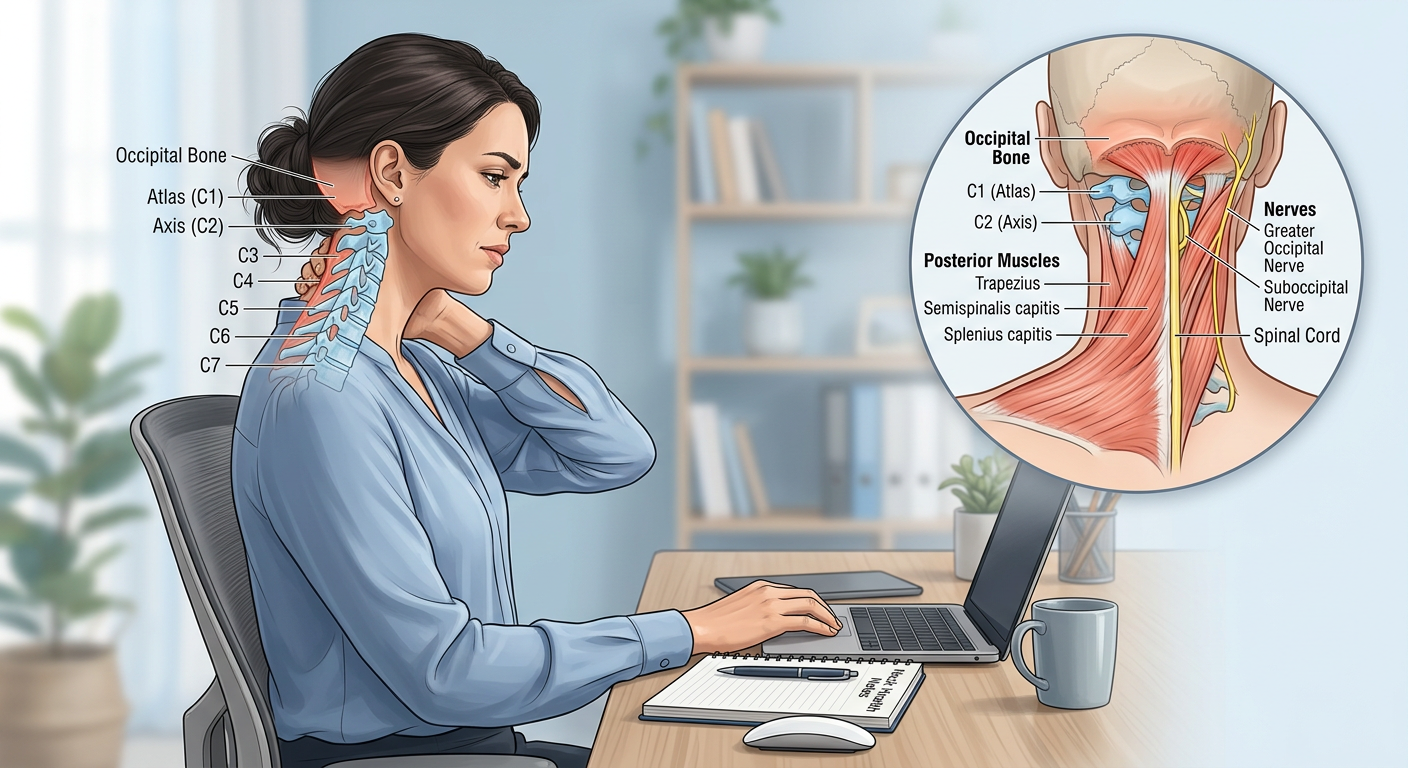
Your neck is way more complicated than it looks. There are bones, muscles, nerves, and blood vessels all packed into a small space.
The Bones
Your spine has seven bones in your neck. They’re called cervical vertebrae. Doctors call them C1 through C7. These bones stack on top of each other like building blocks.
At the very top of your spine sits your skull. Where they meet is the base of your skull. This is where many people feel pain.
The Muscles
You have a bunch of muscles in your neck. The big ones are called the trapezius. They run from your neck down to your shoulders. When these muscles get tight, they pull on everything around them.
There are also smaller muscles right at the base of your skull. They’re called suboccipital muscles. These little muscles do a lot of work. They help you move your head and hold it up.
The Nerves
Nerves run through your neck too. One important nerve is called the occipital nerve. It goes through the base of your skull. When this nerve gets pinched, it causes pain.
Why This Area Gets Hurt
Your neck works hard all day long. It holds up your head, which weighs about 10 pounds. It twists and turns constantly. And bends forward and backward.
All this movement can cause problems. Muscles get tight. Bones can shift. Nerves can get squeezed. And when any of these things happen, you feel pain.
Why Your Neck Hurts
Pain doesn’t just appear for no reason. Something is causing it. Let’s look at the most common reasons.
You Sit Too Much (And In Bad Positions)
This is the number one cause of neck pain today.
When you look at your phone, your head leans forward. When you work at a computer, your shoulders hunch up. And when you sleep on a pile of pillows, your neck bends in weird ways.
Doctors call forward head posture ‘tech neck.’ Your head moves forward even a little bit. But this puts way more pressure on your neck muscles. Research from the American Chiropractic Association shows this is one of the top causes of neck pain today.
Think of it like this: Your head weighs 10 pounds when it’s straight up. But if it leans forward just 15 degrees, it feels like 27 pounds to your neck. That’s a lot of extra weight for muscles to hold up all day.
Your Muscles Are Too Tight
Sometimes your neck muscles just get tight. This happens when you sit in one position for hours. It happens when you’re stressed. It happens when you sleep wrong.
When muscles get tight, they form knots. These knots are called trigger points. They hurt when you touch them. They can cause pain in other spots too.
For example, a tight muscle at the base of your skull can cause headaches. You might think you have a headache when really it’s your neck.
You Got Hurt
Maybe you fell. Maybe someone hit you in the car, or you slept wrong and woke up with a stiff neck.
These injuries can strain or even tear your neck muscles. They can also move your bones out of place.
Whiplash is a common injury. It happens when your head suddenly jerks backward then forward. This often happens in car accidents. Your muscles can’t move that fast. So they get stretched and torn.
Your Bones Are Wearing Out
As you get older, your spine changes. The discs between your bones wear down. The bones can develop bumps and rough spots.
Doctors call this cervical spondylosis or cervical arthritis. It’s not dangerous by itself. But it can cause pain and stiffness.
A Disc Is Pushing On Your Nerve
Between each bone in your spine is a disc. It’s like a cushion. These discs can bulge or slip out of place. When they do, they might push on a nerve.
This causes sharp pain. You might feel tingling or numbness. You might feel weakness in your arm or hand.
You’re Really Stressed
Stress is sneaky. When you’re stressed, your muscles tighten up without you even noticing.
Your trapezius muscles especially get tight when you’re anxious. They’re connected to your “fight or flight” response. When you’re stressed, they clench. And they stay clenched.
Days of clenched muscles cause pain. Your neck gets sore. Sometimes you get a headache too.
Less Common Reasons
Sometimes the problem is rarer.
Occipital neuralgia is when the occipital nerve gets pinched. You feel sharp, shooting pain at the base of your skull. It can feel like electric shocks.
TMJ problems are in your jaw joint. But they can cause neck pain too. Your jaw and neck muscles are connected.
Infections and autoimmune diseases can also cause neck pain. But these are uncommon.
How You’ll Know Something Is Wrong
Neck pain feels different for different people. You might have sharp pain or dull aching. You might have pain all the time or just sometimes.
The Pain Itself
Sharp pain usually means something is pinching. It comes and goes. Moving in certain ways makes it worse.
Dull aching pain usually means tight muscles. It’s there most of the time. It gets worse when you’re tired or stressed.
Some people feel pain in one spot. Others feel it spread across their whole neck and shoulders.
Other Symptoms That Go With Neck Pain
Pain is just the beginning. You might notice other things too.
You might get headaches. These happen because tight neck muscles pull on your head.
You might feel dizzy. This happens when nerves in your neck get irritated.
You might feel tingling or numbness in your arm or hand. This means a nerve is being pinched.
You might not be able to move your head all the way. Your neck feels stiff.
When You Really Need A Doctor
Some symptoms mean you need to see a doctor right away.
Go to the doctor if you got hit on the head or neck. Go if you had a car accident, or if your pain started suddenly and is really severe.
Also go if your pain doesn’t get better after two weeks. Go if the pain is getting worse. Go if you have numbness or weakness in your arm.
And go if you have a fever with neck pain. This could mean an infection.
How Doctors Figure Out What’s Wrong
When you see a doctor, they ask questions first. They want to know when it started. They want to know what makes it better or worse.
Then they examine your neck. They push gently on different spots. They check if you can move your neck in all directions. And they test your strength and feeling in your arms.
Tests Doctors Might Do
If they need more information, they order tests.
X-rays show your bones. They can show if your vertebrae are damaged or out of place. If you’re worried about fractures or breaks, learn the difference between broken and fractured bones so you know what to ask your doctor about.
MRI scans show soft tissues like muscles, discs, and nerves. They’re really good at finding problems.
CT scans take detailed pictures of your bones. They’re helpful if surgery might be needed.
Sometimes doctors do nerve tests. These show if a nerve is being pinched and how badly.
How To Fix Your Neck Pain
The good news is that most neck pain gets better without surgery. You just need the right treatment.
Rest And Changing What You Do
Sometimes the best medicine is stopping the thing that’s hurting you.
If you sit at a computer all day, you need breaks. Get up every hour. Walk around. Stretch.
If you sleep on your stomach, try sleeping on your back or side instead. This is better for your neck.
If you carry a heavy bag on one shoulder, switch sides or use a backpack instead.
Small changes like these often help a lot.
Heat And Cold
Heat relaxes tight muscles. Cold reduces swelling.
Use heat when your pain is from tight muscles. A heating pad for 15 minutes helps. A hot shower helps too.
Use cold when you just got hurt and there’s swelling. Ice for 15 minutes at a time reduces swelling.
You can alternate. Use ice for a few days after injury. Then switch to heat.
Medicine
Over-the-counter pain relievers help. Ibuprofen (Advil) and naproxen (Aleve) reduce both pain and swelling.
Acetaminophen (Tylenol) helps with pain but not swelling.
Take these as directed on the bottle. Don’t take them for more than 10 days without talking to a doctor.
Your doctor might prescribe stronger medicine if you need it.
Physical Therapy Works
A physical therapist teaches you exercises. These exercises strengthen weak muscles. They stretch tight ones. The American Physical Therapy Association recommends physical therapy as a first-line treatment for most neck pain cases.
You’ll do exercises at home. You’ll do them several times a day. After a few weeks, you feel better.
The best part is that these exercises prevent the pain from coming back.
Stretches You Can Do Right Now
Here are simple stretches that help most people:
Neck Tilt: Slowly tilt your ear toward your shoulder. Hold for 20 seconds. Don’t force it. Do both sides.
Chin Tucks: Pull your chin straight back like you’re making a double chin. Hold for five seconds. Repeat 10 times. This fixes forward head posture.
Shoulder Shrugs: Lift your shoulders up to your ears. Hold for three seconds. Let them drop. Repeat 10 times.
Upper Trap Stretch: Put your right hand on your head. Gently pull your head toward your right shoulder. Hold for 20 seconds. Do both sides.
Do these stretches three times a day. They only take a few minutes.
Massage Helps
Massage relaxes tight muscles. It also improves blood flow. This helps your neck heal faster.
You can massage your own neck gently. Use your fingers to make small circles on tight spots.
A professional massage therapist can do deeper work. Even one session helps most people feel better.
Fix How You Sit And Stand
Your workspace matters. Here’s how to set it up right:
Your computer screen should be at eye level. Your elbows should bend at 90 degrees. And your feet should touch the ground.
Use a pillow that supports your neck. Don’t use too many pillows. One good pillow is better than a stack.
Check your posture throughout the day. Your ears should be over your shoulders. Your shoulders should be over your hips.
Advanced Treatments (If You Still Hurt)
If conservative treatments don’t work, there are other options.
Injections can help. A doctor injects medicine right where it hurts. This reduces pain and swelling. The relief usually lasts weeks or months.
Some people need more intensive physical medicine treatments. A specialist works with you to rebuild strength and movement.
Surgery is a last resort. It’s only done if nothing else works and you have serious problems like nerve damage.
Stop It From Happening Again
The best treatment is prevention. Once you fix your neck pain, keep it from coming back.
Be Aware Of Your Posture
Check your posture several times a day. Are your ears over your shoulders? Are your shoulders relaxed?
Put a sticky note on your computer. It reminds you to check your posture.
It takes a few weeks, but good posture becomes a habit.
Move Your Body
Sit still for hours and your muscles get tight. Movement helps.
Take breaks every hour. Walk around. Stretch.
Do your neck exercises every day. Even when your neck feels fine, keep doing them. They keep your muscles strong.
Exercise Regularly
General exercise helps your whole body. It reduces stress. It makes your muscles strong.
Yoga is especially good for neck problems. It stretches and strengthens.
Walking, swimming, and biking all help too. Aim for 30 minutes most days.
Deal With Your Stress
Stress makes your neck tight. Find ways to relax.
Deep breathing helps. Breathe in slowly for four counts. Hold for four. Breathe out for four. Do this five times.
Meditation helps. Progressive muscle relaxation helps. Time in nature helps.
Find what works for you. Do it daily.
Sleep Better
Bad sleep causes neck pain. Good sleep helps it heal.
Sleep on your back or side, not your stomach.
Use one pillow that supports your neck.
Keep your bedroom cool and dark.
Go to bed at the same time every night.
Take Breaks From Screens
Screens hurt your posture. Your head leans forward. Your eyes strain.
Follow the 20-20-20 rule: Every 20 minutes, look at something 20 feet away for 20 seconds. This relaxes your eyes and breaks your posture habit.
Before bed, don’t use screens for an hour. Blue light keeps you awake.
Quick Fixes You Can Do Today
You don’t have time to wait. You want relief now. Here are quick things that work.
Right Now, This Second
Stop what you’re doing. Drop your shoulders. Let them relax. You probably didn’t realize they were up by your ears.
Gently turn your head side to side. Don’t force it. Just move it as far as feels comfortable.
Do the chin tuck exercise we talked about. Do it 10 times.
In The Next Hour
Take a warm shower. Let the warm water run on your neck and shoulders for 10 minutes.
Or use a heating pad for 15 minutes.
Do your stretches.
Tonight
Sleep with a better pillow. Get a pillow that supports the curve of your neck.
Sleep on your back or side.
Do your stretches before bed.
When To Get Help From A Doctor
You can treat many cases of neck pain at home. But some cases need professional help.
See a doctor if your pain doesn’t improve after two weeks. See one if your pain gets worse. And see one if you have numbness or weakness.
Different Types Of Doctors
Your regular doctor is a good place to start. They can rule out serious problems.
A chiropractor works with your spine and bones. Some people feel better after chiropractic care. Others don’t. It depends on your problem.
A physical therapist teaches you exercises. They’re usually very helpful.
A neurologist specializes in nerves. See one if you have numbness or tingling. The American Academy of Neurology can help you find a neurologist in your area if you need specialist care.
An orthopedic surgeon deals with bones and joints. See one if you might need surgery.
Questions To Ask Your Doctor
Ask what’s causing your pain. Ask what you should and shouldn’t do. And how long will it take to get better? Ask what exercises to do. Ask when to come back.
Real Stories From Real People
Sometimes it helps to hear that other people have dealt with this too.
Sarah’s Tech Neck
Sarah worked at a computer 10 hours a day. She didn’t think about her posture. Over three months, her neck started hurting. It got worse and worse.
She finally went to a doctor. The doctor said she had classic tech neck. Forward head posture had tightened her muscles.
Sarah fixed her workspace. She adjusted her screen height. She did neck exercises. After four weeks, her pain was gone.
The key was stopping the behavior that caused it in the first place.
Mike’s Car Accident
Mike was hit from behind in a car accident. His neck hurt right away. It got stiff.
He had whiplash. His muscles were stretched and torn.
His doctor sent him to physical therapy. At first, the exercises hurt. But he kept doing them. After eight weeks, he was back to normal.
He learned that treating whiplash early prevents long-term problems.
Grandma’s Arthritis
Grandma had neck pain that never went away. She was 68 years old. X-rays showed arthritis in her spine.
She thought nothing would help. But physical therapy made a big difference. Keeping her neck strong and flexible reduced her pain. She still has some discomfort, but it’s manageable.
She learned that age doesn’t mean you have to live with pain.
Questions People Always Ask
How Long Will This Take To Get Better?
Most people feel better in two to four weeks. Some take longer. It depends on what’s causing the pain.
Muscle strains usually heal fastest. Arthritis takes longer. Some problems that have been there for years might take months to improve.
Is Neck Pain Dangerous?
Most neck pain isn’t dangerous. It’s painful but not harmful.
But some conditions can be serious. Sharp pain with numbness. Pain after a serious injury. These need attention.
If you’re worried, see a doctor. They can tell you if it’s serious.
Can I Exercise If My Neck Hurts?
Yes, but carefully. Gentle exercises help. Strenuous exercise that makes pain worse doesn’t.
Do gentle stretches. Do slow, controlled movements. Avoid movements that hurt.
If something hurts, stop doing it.
What’s The Difference Between Neck Pain And A Pinched Nerve?
Neck pain can have many causes. Pinched nerves are one specific cause.
With a pinched nerve, you feel numbness or tingling. You might feel weakness. The pain is often sharp or shooting.
Regular neck pain from tight muscles is usually achy. It doesn’t cause numbness unless it’s very severe.
Can Stress Cause Neck Pain?
Absolutely. Stress makes your muscles tight. When you’re stressed, you clench your neck muscles without realizing it. Days of clenched muscles cause real pain.
Relaxation helps. So do exercise and good sleep.
Does Age Matter?
Older people get neck pain more often. That’s because discs wear out and bones develop arthritis.
But young people get neck pain too. Usually from posture and stress.
Age doesn’t mean you have to suffer. Treatment works for all ages.
Will I Need Surgery?
Most likely not. Only about one percent of neck pain cases need surgery.
Surgery is only for serious problems. A disc pressing hard on a nerve. Bones that are badly damaged. Severe weakness that won’t improve otherwise.
Most people get better without surgery.
Conclusion
Your neck pain has a cause. You can fix it.
Most cases improve with simple changes. Better posture. Stretches. Less stress. Better sleep.
If these don’t work, see a doctor. There are more advanced treatments available.
The key is not waiting. The longer you ignore neck pain, the longer it takes to heal. Start treating it now.
You don’t have to live with pain. Take action today. Your neck will thank you.